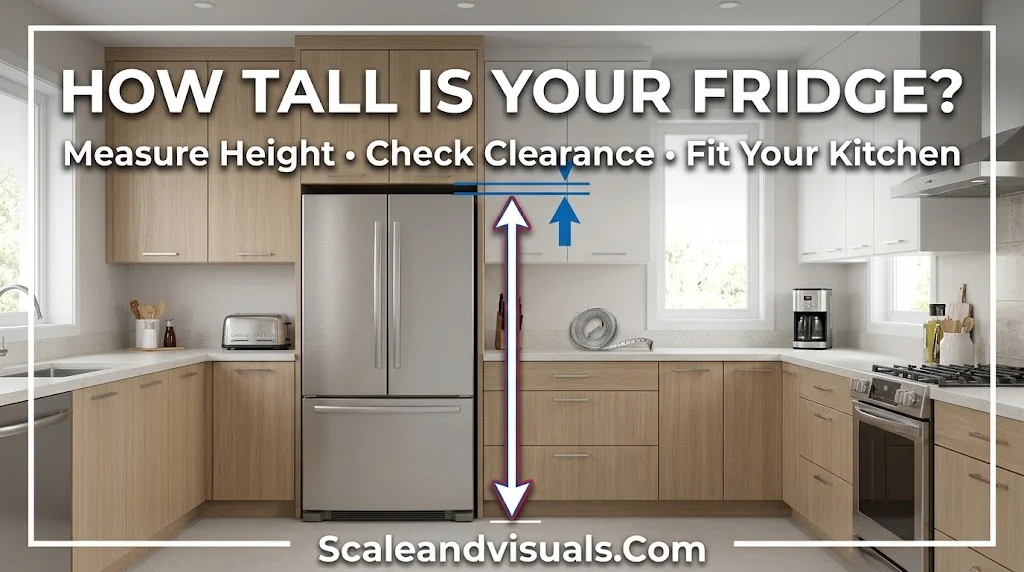
How tall is a refrigerator? Most full-size models stand 61 to 72 inches tall. The average fridge height is about 67 to 70 inches.
Height is easy to overlook. Many buyers check width first, then find the fridge hits a cabinet. This guide covers heights by type, how to measure, and how height connects to storage capacity.
Choosing the right fridge height is just one part of making your kitchen functional and visually balanced. Explore more practical measurement guides and real-life size comparisons with Scale and Visuals to better understand everyday objects and spaces.
Table of Contents
Average Refrigerator Height by Type
Fridge height changes with the style you pick. Here is how tall each fridge type usually is.
| Refrigerator Type | Typical Height |
|---|---|
| Top-freezer | 61–69 inches |
| Bottom-freezer | 65–71 inches |
| French door | 67–72 inches |
| Side-by-side | 66–70 inches |
| 4-door | 69–70 inches |
| Counter-depth | About 67–72 inches |
| Apartment-size | About 66–70 inches |
| Built-in or column | About 72–84 inches |
| Undercounter | About 35 inches |
These are averages. Exact fridge dimensions vary by brand and model, so check the spec sheet before you buy.
French door fridge height runs 67 to 72 inches. That makes it one of the tallest full-size styles. You get wide fresh-food shelves on top and a freezer drawer below.
Side-by-side height fridge is about 66 to 70 inches. The freezer and fridge sit next to each other, top to bottom. The shelves are tall but narrow.
Counter-depth height fridge is close to French door and side-by-side models. These fridges are shallow, about 24 to 30 inches deep, so they sit flush with countertops. To make up for the lost depth, many are a little taller or wider than standard-depth models.
Top-freezer models are the shortest full-size style. They suit smaller kitchens and fit most cabinet openings.
Some fridges fall outside the full-size range. Built-in and column refrigerators often stand 72 to 84 inches tall. Undercounter fridges are only about 35 inches tall.
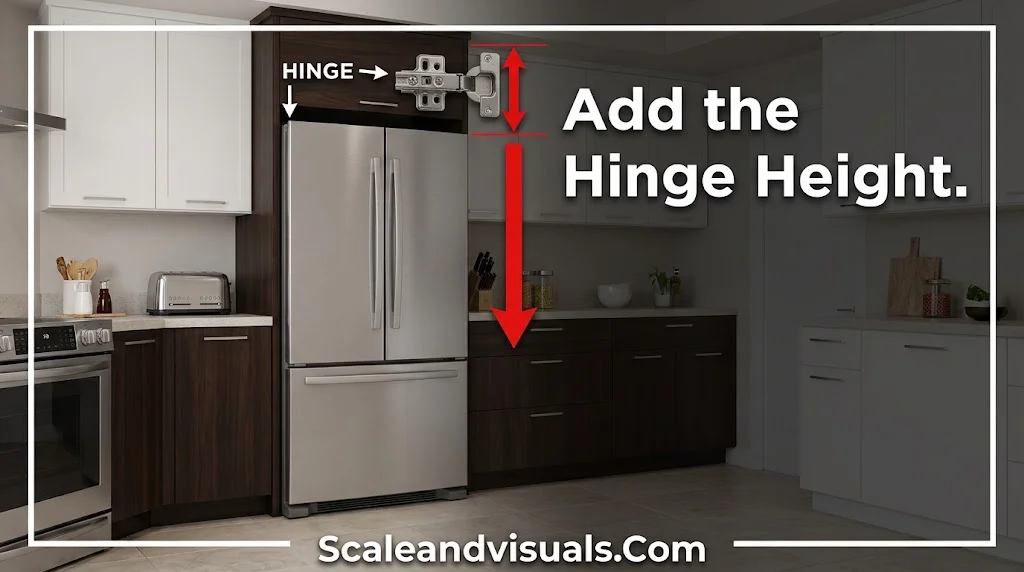
Two small parts add height. Hinge covers and leveling feet can add about an inch or more. Add that to the listed height.
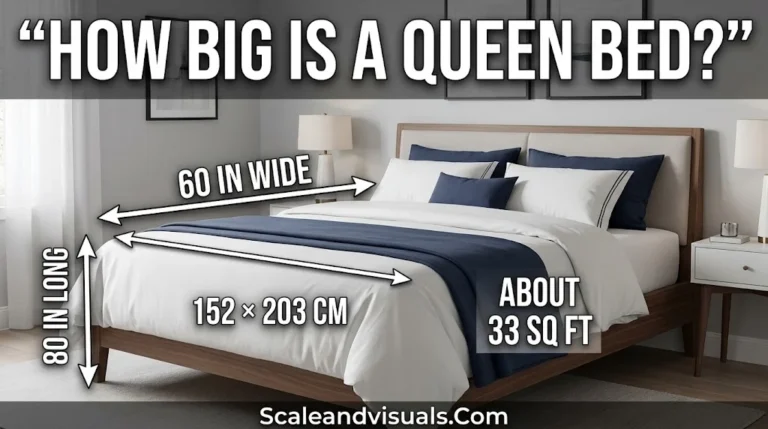
Planning your bedroom or upgrading your kitchen appliances often comes down to making the most of your available space. Just as measuring refrigerator height helps ensure a proper kitchen fit, understanding queen-size bed dimensions and room requirements can help you create a comfortable bedroom layout without overcrowding the space.
How to Measure Fridge Height for Your Kitchen
A fridge can look perfect in a store and still hit a cabinet at home. Measure your space first.
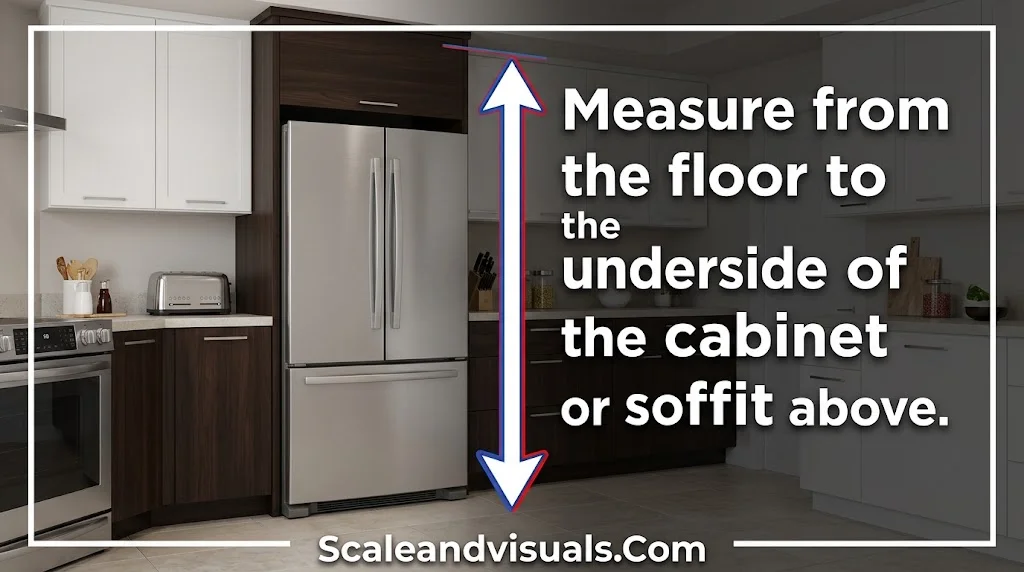
- Measure from the floor to the underside of the cabinet or soffit above. Use the lowest point.
- Add the hinge height. Top hinges and covers sit above the listed height.
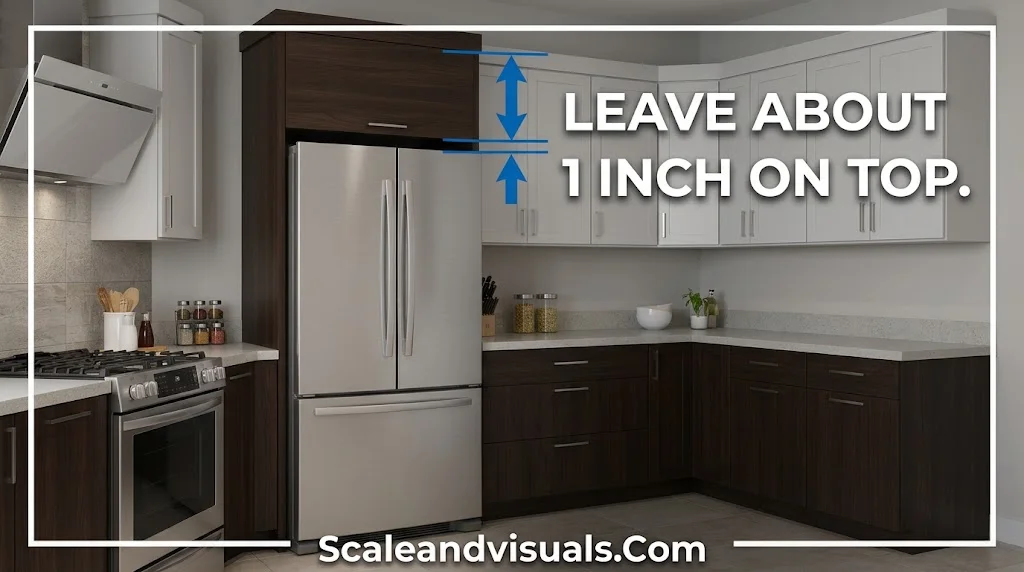
- Leave about 1 inch on top for ventilation. Check the owner’s manual, because brands differ.
- Measure in three spots. Floors and cabinets are not always level. Use the smallest number.

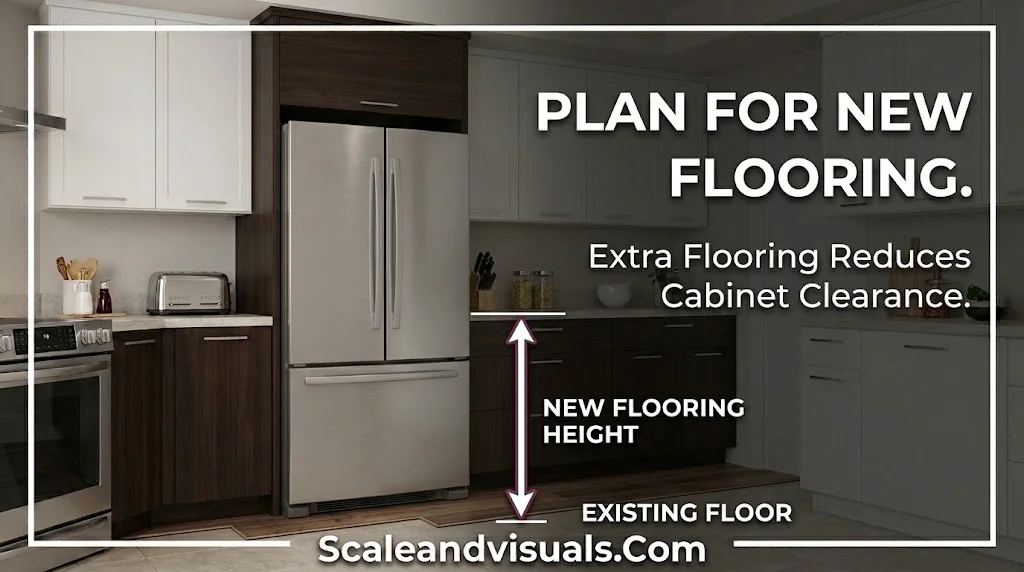
- Plan for new flooring. Thick flooring raises the floor and cuts your cabinet clearance.
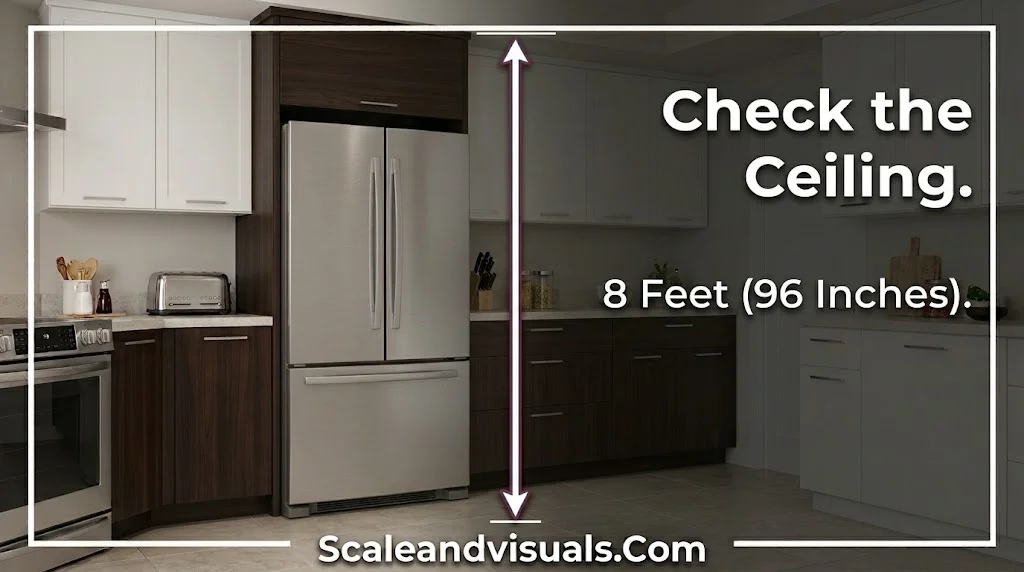
- Check the ceiling if you want a tall built-in. Many US homes have 8-foot ceilings, which is 96 inches.
- Check the delivery path. Most US doors are about 80 inches tall, so fridge height rarely blocks the way. Tight halls and turns do.

- Plan a landing spot. NKBA planning guidelines suggest at least 15 inches of counter space beside or across from the fridge.

Also measure width and depth, and check the door swing.
Fridge Height, Capacity and Household Size
Height is only part of the story. It also shapes storage space, reach and fit.
A common rule is 4 to 6 cubic feet per person. A family of four does well with about 20 cu. ft. Larger families may want 25 cu. ft. or more.
Here is a simple fridge capacity guide:
- Small: 11 to 13 cu. ft.
- Medium: 14 to 21 cu. ft.
- Large: 22 to 31 cu. ft. or more
Taller does not always mean easier. The top shelf in a 70-inch fridge sits above 5 feet. That can be hard to reach.
Freezer position also changes daily use. Bottom-freezer models put fresh food at eye level. Top-freezer models put frozen food at eye level.
Size affects energy use too. A bigger interior takes more power to cool. ENERGY STAR certified fridge are about 9% more energy efficient than models that meet the federal minimum.
Short on space? An apartment-size fridge is about 24 inches wide and near 70 inches tall. It holds 11 to 13 cu. ft. A medium fridge of about 20 cu. ft. suits a family of four.
FAQs
How tall is the average fridge in height?
The average fridge height is about 67 to 70 inches. Most full-size models range from 61 to 72 inches. Top-freezer models sit at the short end. French door and side-by-side models sit at the tall end.
Are all refrigerators 70 inches tall?
No. Full-size refrigerators run about 61 to 72 inches tall. Undercounter fridges are about 35 inches. Built-in and column models often reach 72 to 84 inches. Always check the exact model height.
How tall is a full height fridge?
A full height fridge is a full-size, freestanding unit. It usually stands 66 to 72 inches tall. It is not a mini fridge or an undercounter model. Built-in column fridges can be taller.
What is the most common fridge size?
Most homes use a fridge about 30 to 36 inches wide and 66 to 70 inches tall. It holds roughly 18 to 25 cubic feet. Top-freezer, French door and side-by-side styles all fit this range.
Conclusion
Most full-size refrigerators stand 61 to 72 inches tall. The average fridge height is about 67 to 70 inches. French door and side-by-side models run tallest, and top-freezer models run shortest. Measure from the floor to the cabinet, add hinge height, and leave about an inch on top.

Abroy Usman is a passionate digital content creator and visual enthusiast dedicated to making complex ideas easier to understand through clear, engaging, and visually appealing content. As an author at Scale & Visuals, he focuses on sharing practical insights, creative ideas, and useful information designed to help readers learn, grow, and make better digital decisions.