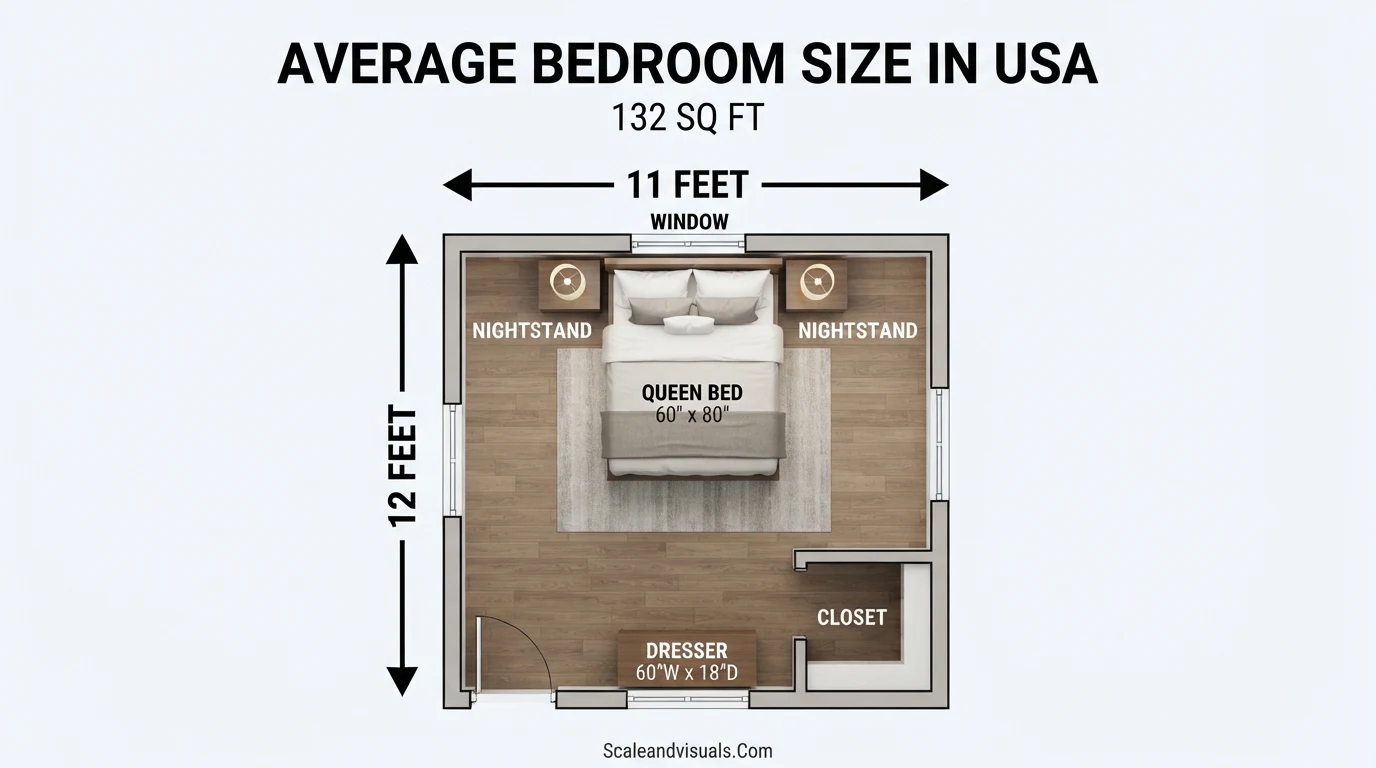
The average bedroom size in the USA is about 11 x 12 feet, or 132 square feet. A master bedroom is much bigger, at about 14 x 16 feet. New homes are shrinking, and some of the numbers may surprise you. Here are seven real estate stats for 2026, plus what they mean for buyers, renters and builders.
Understanding bedroom dimensions is one part of knowing how much space a home really offers. With Scale and Visuals, you can explore real-world size comparisons and visual measurements that make room dimensions, floor space, and everyday measurements easier to understand.
Table of Contents
What Is the Average Bedroom Size in the USA?
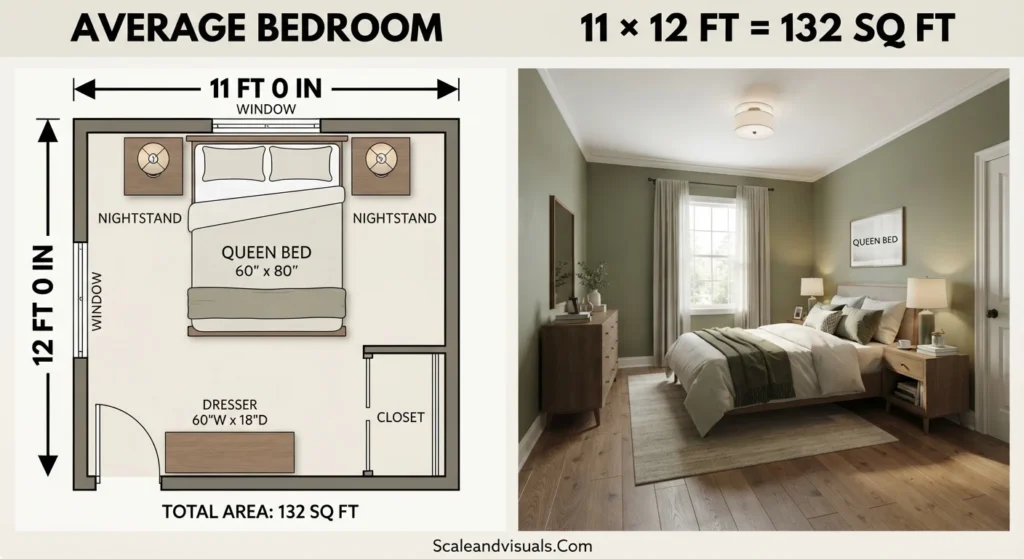
The average bedroom size in square feet depends on the room’s job. A master suite needs far more space than a kids’ room.
Stat: 132 square feet. The typical U.S. bedroom size is 11 x 12 feet, or about 12.3 square meters. Most bedrooms fall between 120 and 200 square feet.
Stat: 224 square feet. The standard master bedroom size is 14 x 16 feet, or about 20.8 square meters. That is enough room for a king bed, two nightstands, a dresser and a small chair.
Here is how each bedroom type compares:
| Room type | Typical size (ft) | Square feet | Square meters | Best-fit bed |
|---|---|---|---|---|
| Master bedroom | 14 x 16 | 224 | 20.8 | King or California king |
| Secondary bedroom | 10 x 12 | 120 | 11.2 | Queen or full |
| Guest bedroom | 10 x 12 | 120 | 11.2 | Queen or full |
| Kids’ bedroom | 10 x 10 | 100 | 9.3 | Twin or full |
| Average bedroom | 11 x 12 | 132 | 12.3 | Varies |
Smaller homes may have a kids’ room as tight as 8 x 10 feet, or 80 square feet.
Stat: 70 square feet. The minimum bedroom size in most U.S. codes is 70 square feet, or about 6.5 square meters. The International Residential Code (IRC) also says no side may be under 7 feet. A bedroom needs an egress window for a safe exit too. Local rules differ, so check with your city. Good to know: The closet and attached bathroom are not part of the bedroom size. Measure the carpet area only.
Related post : How Long Is 2 Miles in Minutes Walking? (Exact Times by Pace)
Average Master Bedroom Size and 2026 Home Trends

Bedrooms follow the size of the house. When homes shrink, rooms shrink with them. Stat: 11.3%. A master bedroom takes up about 11.3% of the finished floor space, based on a National Association of Home Builders (NAHB) survey. The 1/10 rule is a handy guide: a bedroom should use about 10% of the total home.
Master bedroom size by home type:
- Small homes: about 200 square feet (14 x 14 feet).
- Standard homes: 200 to 350 square feet.
- Large homes: over 350 square feet.
- Luxury homes: 400 to 600+ square feet.
Floor plan matters. A ranch home has one to three bedrooms, and some are as small as 8 x 10 feet. A condo usually has a master slightly larger than the second bedroom. A barndominium has an open layout with roomy suites. Urban homes run smaller than suburban homes.
Stat: 2,409 square feet. The average new single-family home sold in 2025 was 2,409 square feet. That is down 11.6% from 2,724 square feet in 2015, based on U.S. Census Bureau data. About 25% of new homes were under 1,800 square feet, up from 16% a decade ago.
Region counts too. New homes in the Northeast average 2,866 square feet. In the Midwest, they average 2,262 square feet.
Stat: 46.5%. Three-bedroom homes are still the most common new build, at 46.5%. Four-bedroom homes fell to 31.7%, the lowest share since 2010. Builders now favor efficient layouts over extra rooms.
Does Bedroom Size Affect Home Value?

Yes. Buyers check the master bedroom size and the number of bedrooms first. Stat: $171.95 per square foot. The average price per square foot of a new home rose 71.9% in ten years, from $100.02 in 2015. At that rate, a 224-square-foot master holds about $38,500 of floor space. Buyer appeal. Buyers expect the master to be a bit larger than the other rooms. Cramped bedrooms in an open floor plan can hurt resale value. A home with more bedrooms also attracts families and people who need a home office.
How big should a bedroom be for a bed?
Use these simple rules:
- 3:1 rule: the room should be about three times the bed’s footprint.
- 30-inch rule: leave about 30 inches of clear space on three sides of the bed.
- King bed: a king is 76 x 80 inches and needs a room of at least 12 x 12 feet. A master 14 feet wide is better.
- Queen bed: a queen is 60 x 80 inches and fits well in a 10 x 12 foot room.
- California king: it measures 72 x 84 inches, so it needs extra length.
Small bedroom tips. Put the bed in a corner and the furniture on one wall. Choose a storage bed or a tall wardrobe. Paint with light colors and add a mirror to make the room feel wider. Rug size. A 9 x 12 foot rug suits a 14 x 16 foot master.
FAQs
What is the average bedroom size in the USA?
The average bedroom in the USA is about 11 x 12 feet, or 132 square feet. Most rooms range from 120 to 200 square feet. A master bedroom is larger, at about 224 square feet.
What is the average master bedroom size in square feet?
The standard master bedroom is 14 x 16 feet, or 224 square feet. In standard homes, it runs from 200 to 350 square feet. Luxury homes often reach 400 square feet or more.
What is the minimum legal bedroom size?
Most U.S. codes follow the IRC, which sets a minimum of 70 square feet with no side under 7 feet. A bedroom also needs an egress window. Local codes can differ, so confirm with your city.
How big should a bedroom be for a king bed?
A king bed needs a room of at least 12 x 12 feet. A master 14 feet wide is better. This leaves about 30 inches of walking space on three sides of the bed.
Are bedrooms getting smaller in new homes?
New homes are smaller. The average fell 11.6% from 2015 to 2025, to 2,409 square feet. The share of four-bedroom homes also hit its lowest point since 2010. Tighter homes usually mean tighter rooms.
Conclusion
The average bedroom size in the USA is 132 square feet, and the typical master is 224 square feet. Homes are getting smaller while the price per square foot keeps rising. Use the 3:1 rule and the 30-inch rule to check any room. Measure first, then buy the bed.

Abroy Usman is a passionate digital content creator and visual enthusiast dedicated to making complex ideas easier to understand through clear, engaging, and visually appealing content. As an author at Scale & Visuals, he focuses on sharing practical insights, creative ideas, and useful information designed to help readers learn, grow, and make better digital decisions.