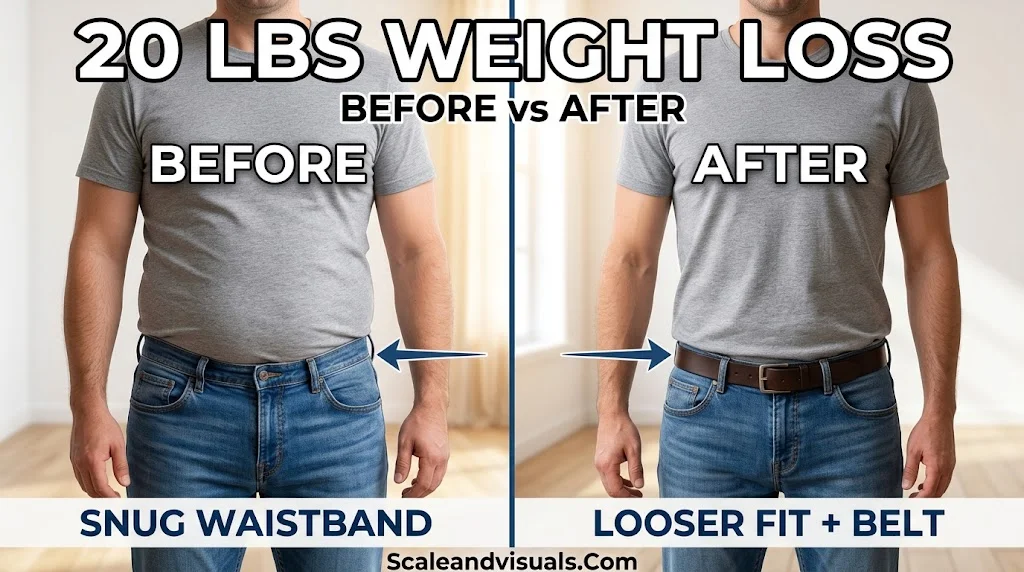
Twenty pounds sounds small. In your closet, it can look big. What does 20 lbs look like in clothes? For most adults, it means one to two clothing sizes, a looser waistband, and a cleaner fit through the hips and shoulders.
The exact result depends on your height, starting weight, and body type. Below, you’ll find real 20 lb weight loss before and after size drops, a simple size chart, and easy ways to track your progress with clothes instead of the scale.
Understanding what a 20-pound weight loss can look like in clothing sizes can help you visualize changes in body measurements and fit. At Scale and Visuals, you can explore easy-to-understand size comparisons that make everyday measurements and physical changes easier to picture.
Table of Contents
What 20 Lbs Loss Looks Like in Clothes
Clothes often show change before the scale or the mirror does. Here is where losing 20 pounds shows up first.
Short answer: most people drop 1 to 2 US clothing sizes.
- Most size charts step up by roughly 1 to 2 inches at the waist and hips from one size to the next.
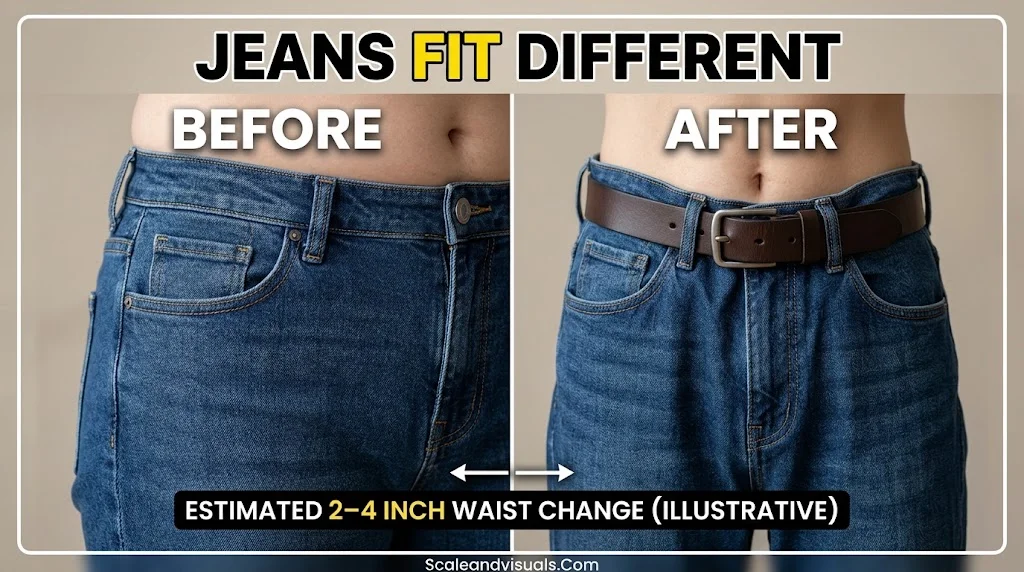
- Many people lose about 2 to 4 inches around the waist with 20 lbs of fat loss.
Where you’ll notice it:
- Jeans and pants: The waist drops about 2 to 4 inches. The waistband gaps, and your belt needs a new notch.
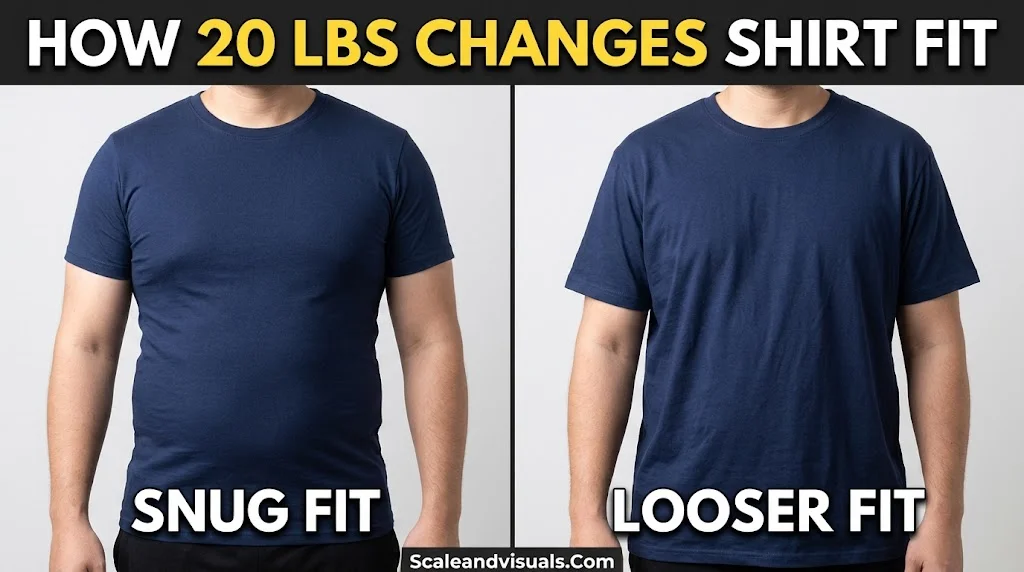
- Shirts and tees: There is less pull across the belly and chest. Fabric drapes instead of clings.
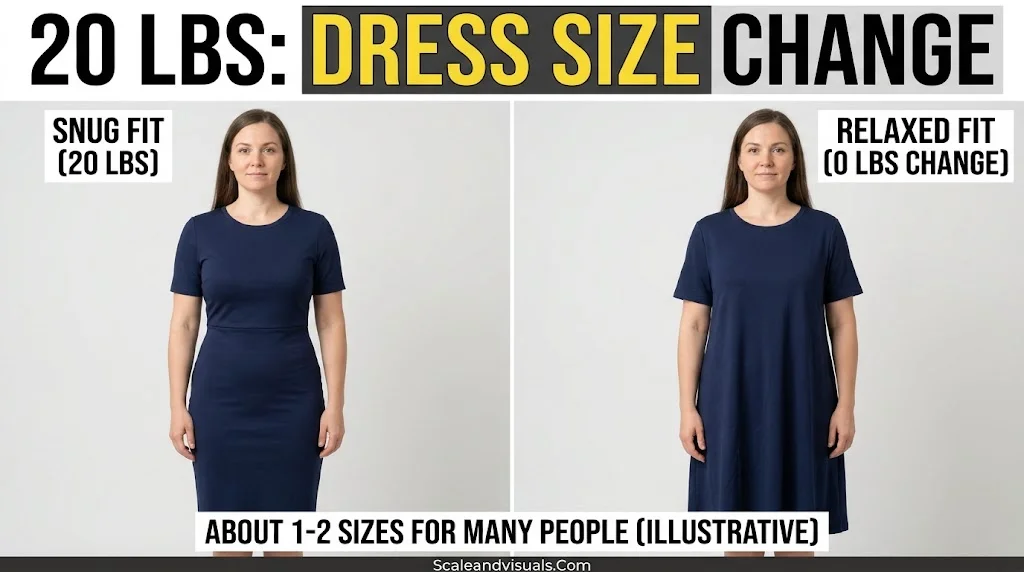
- Dresses and skirts: You drop one to two sizes in the waist and hips. The zipper closes with ease.
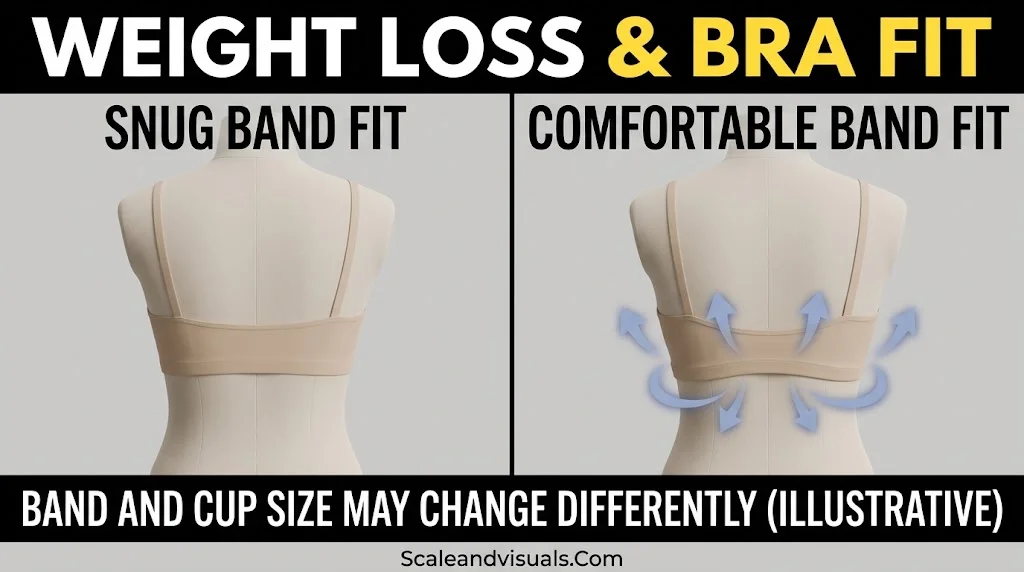
- Bras (women): The band may drop a size, and the cups may shift. The band rides up less.
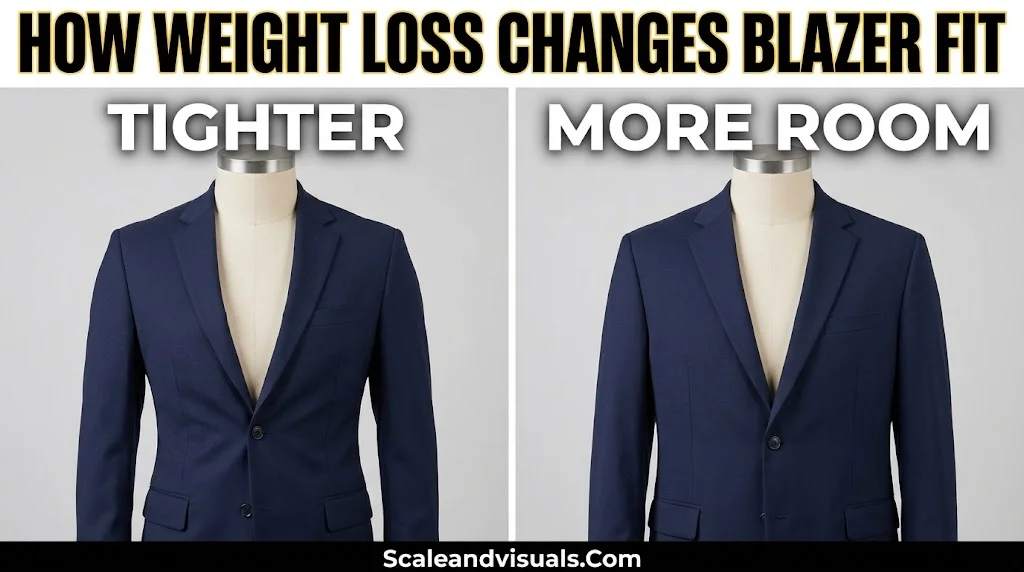
- Jackets and blazers: They feel looser through the shoulders and arms. Buttons close without strain.
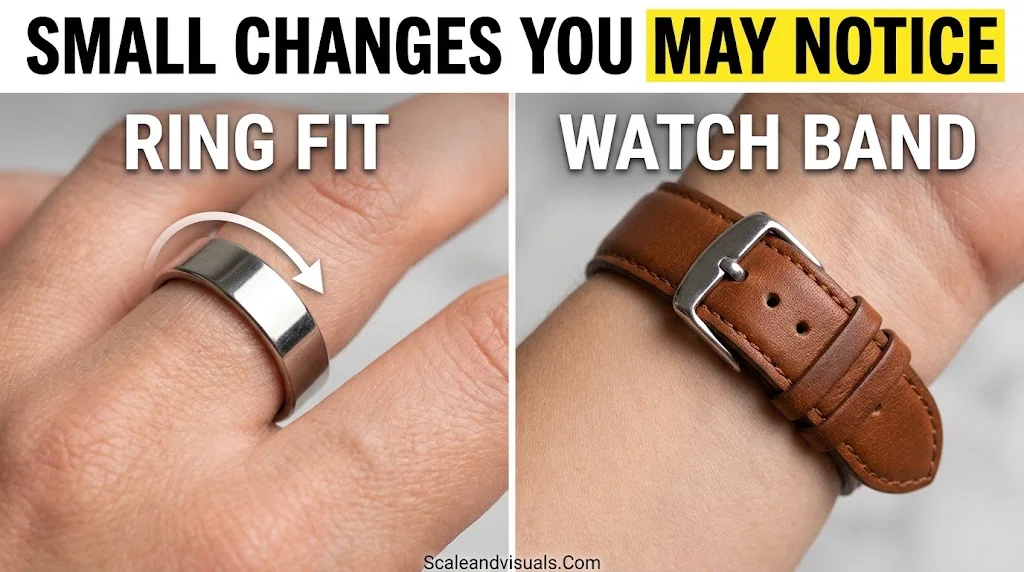
- Rings and watch bands: They often feel looser. A ring may spin on your finger.
Why the same 20 lbs can look different:
Without it, you may drop sizes but still feel soft or “skinny fat.”
Muscle is denser than fat, so it takes up less space per pound, according to Cleveland Clinic.
Two people can lose the same 20 lbs and look different in the same jeans.
Strength training helps you keep a toned, defined fit as the fat comes off.
20 Lbs Look Like Drops by Height and Starting Weight
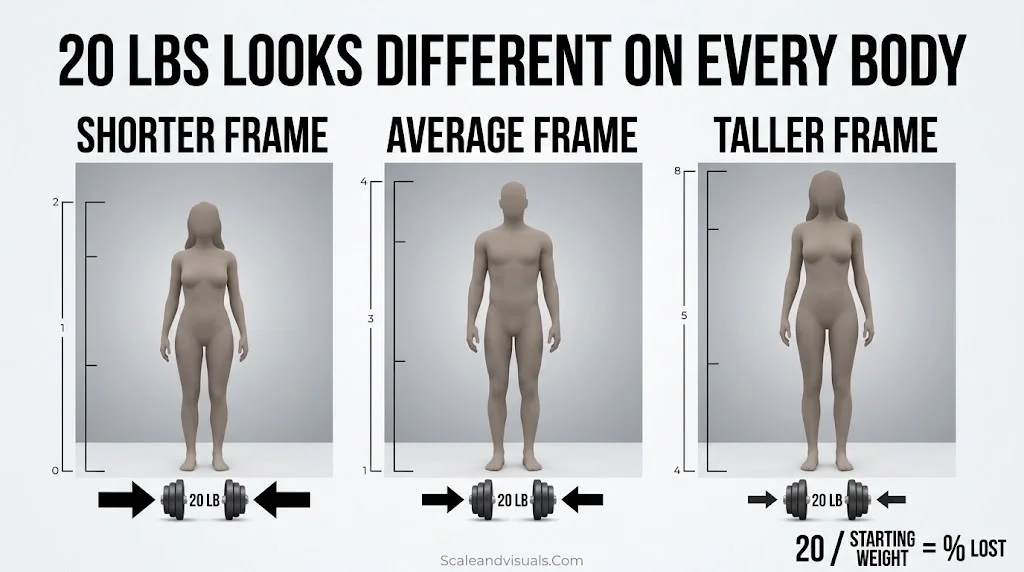
The same 20 lbs looks different on every frame. It shows faster on shorter frames and lighter starting weights.
Here is why. Twenty pounds is about 13% of body weight for someone at 150 lbs. It is only 8% for someone at 250 lbs. A bigger share means a bigger visual change.
Changes in clothing fit can make weight loss easier to visualize, but understanding weight itself can add another perspective. If you’re curious about how heavier amounts compare to everyday items, explore these real-life examples of what 100 pounds weighs to make the difference easier to picture.
| Height and sex | Starting weight | 20 lbs as % of body weight | Likely clothing change |
|---|---|---|---|
| 5’2″ woman | 150 lbs | 13% | About 2 sizes; clear change at waist and hips |
| 5’6″ woman | 180 lbs | 11% | 1 to 2 sizes |
| 5’10” woman | 200 lbs | 10% | About 1 size |
| 5’10” man | 220 lbs | 9% | 2 to 3 inches off the waist; about 1 pant size |
| 6’0″ man | 250 lbs | 8% | 2 to 3 inches off the waist; about 1 pant size |
These are general estimates. Body type, age, and where you store fat change the result.
Where does it show first?
Men often see change in the belly, chest, and face. Women often see it in the waist, hips, thighs, and face. Hormones and genetics set this order, not your workout choice.
Taller people spread 20 lbs over more surface area. The change looks more gradual. A smaller waist measurement also matters for health. Harvard notes that a waist over 40 inches for men and 35 inches for women is linked to higher health risks.
How to Track Clothing Size Changes After Losing 20 Lbs
The tag on your jeans is a weak yardstick. Vanity sizing means a size 8 can vary by up to three inches at the waist from brand to brand. Even men’s jeans can run one to two inches bigger than the label says.
So track inches, not just numbers. Here is a simple system:
- Pick a benchmark outfit. Use one pair of jeans and one fitted shirt. Try them on every two weeks.
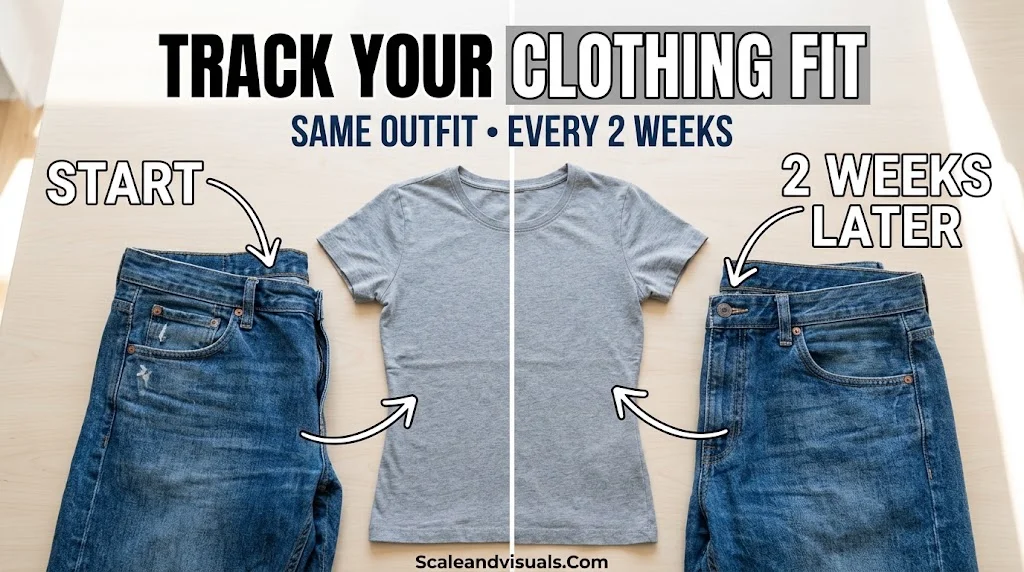
- Measure with a soft tape. Log your waist, hips, chest or bust, and thighs at the same spot each time.

- Take progress photos. Use the same light, outfit, and pose. Compare across a full month.

How long does it take?
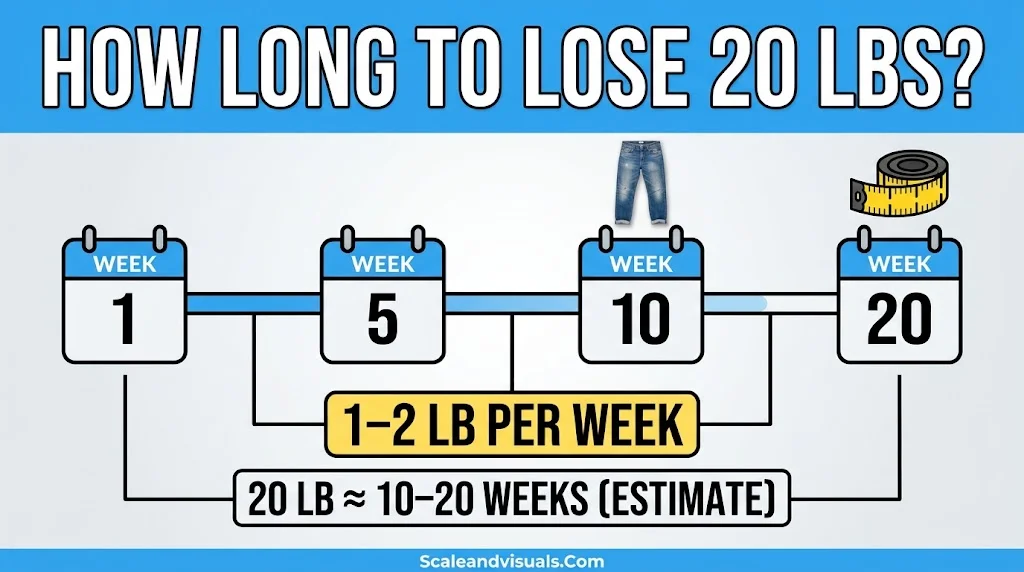
The CDC says gradual loss of about 1 to 2 lbs per week helps people keep weight off. At that pace, losing 20 lbs takes about 10 to 20 weeks. Many people notice the first loose waistband around the halfway point.
Stuck between sizes? A belt, a tailor, or stretch fabrics can bridge the gap while you keep losing.
FAQs
Is a 20 lbs weight loss noticeable?
Yes, for most adults. It shows first in how your clothes fit. A looser waistband, a smaller face, and a drop of one to two sizes are common within a few weeks to a few months.
How much is 20 lbs visually?
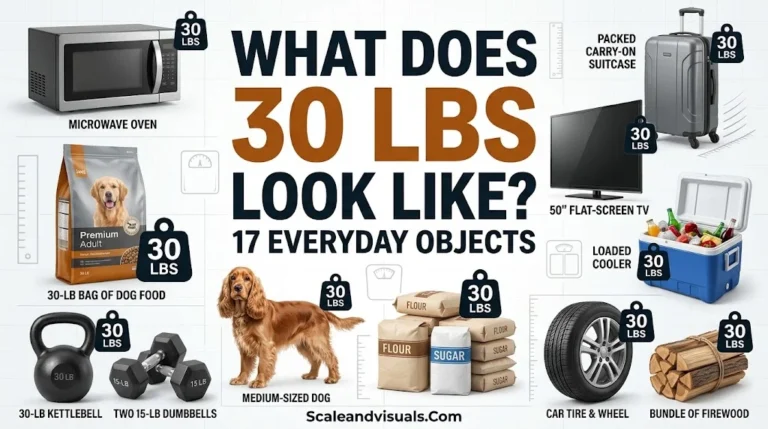
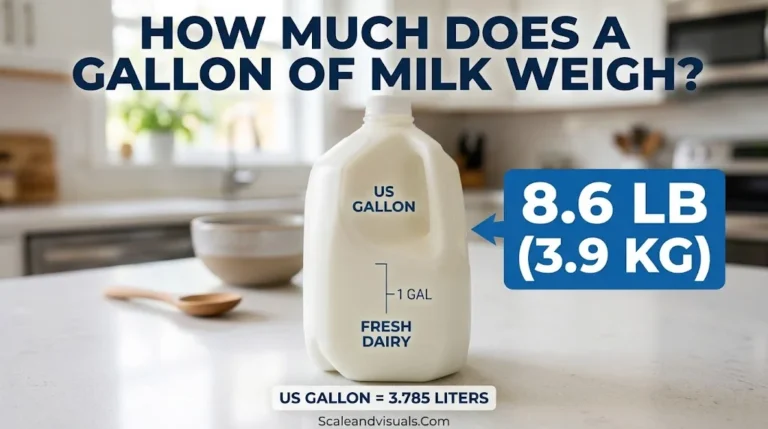
Picture a large bag of dog food, a 20 lb Thanksgiving turkey, or a car tire. Two gallons of milk weigh about 17 lbs, so add a few more pounds on top.
How much is a 20 lbs example?
A 2.5 gallon water jug weighs about 21 lbs. Four 5 lb bags of sugar equal 20 lbs. Both give a clear picture of what you carry off your frame.
What does 20 lbs feel like?
Picture carrying a big dog food bag up the stairs all day. Losing 20 lbs can mean easier movement, less back strain, and steadier energy. In one Wake Forest study of older adults with knee arthritis, every pound lost cut knee load by four pounds per step.
Is 20 lbs heavy?
Yes, to carry for long. Most adults can lift 20 lbs, but it gets tiring fast. By that same four-to-one knee ratio, losing 20 lbs could take about 80 lbs of load off each knee with every step.
How skinny is too skinny for a 5’2″ female?
The CDC calls a BMI under 18.5 underweight. At 5’2″, that is below about 101 lbs. The healthy range runs from about 101 to 136 lbs. BMI is only a screening tool, so talk to a doctor if you feel weak, tired, or miss periods.
Conclusion
Losing 20 lbs usually means one to two clothing sizes, and your clothes will show it before anything else. Track inches, photos, and fit, not just the scale. Aim for steady progress of 1 to 2 lbs a week and keep your muscle. The results will show up in the mirror and in your closet.

Abroy Usman is a passionate digital content creator and visual enthusiast dedicated to making complex ideas easier to understand through clear, engaging, and visually appealing content. As an author at Scale & Visuals, he focuses on sharing practical insights, creative ideas, and useful information designed to help readers learn, grow, and make better digital decisions.