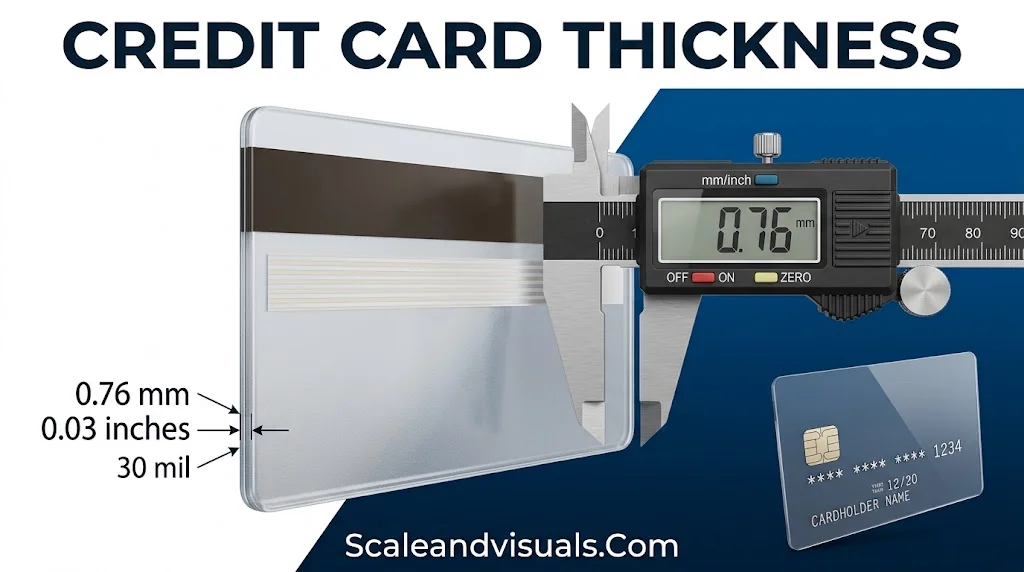
How Thick Is a Credit Card?. A standard credit card is 0.76 mm thick. That equals 0.03 inches or 30 mil. Its full size is 3.375 x 2.125 inches (85.6 x 53.98 mm).
Thickness looks like a tiny detail. Yet it decides whether a card fits a wallet slot, an ATM, or a chip reader. This guide gives you the exact numbers and what they mean.
Understanding the exact thickness of a credit card is a great way to appreciate everyday measurements and how small differences in size matter. Explore more practical measurement guides and everyday object comparisons with scale and visuals to better understand the dimensions of objects around you.
Table of Contents
Standard Credit Card Thickness in mm, Inches and Mil

Every standard card follows one global rule: the ISO/IEC 7810 ID-1 format. Printers also call this size CR80.
Here is the credit card thickness in every common unit:
| Unit | Standard thickness |
|---|---|
| Millimeters (mm) | 0.76 mm |
| Centimeters (cm) | 0.076 cm |
| Inches | 0.03 in |
| Mil | 30 mil |
What is a mil? A mil is one thousandth of an inch. It is not a millimeter. So 30 mil equals 0.030 inch, or 0.76 mm. To convert, multiply mil by 0.0254 to get mm.
ISO allows a small tolerance. Thickness can range from about 0.68 to 0.84 mm. That is why two cards in your wallet may feel a little different.
Here are a few ways to picture it:
- Thirteen stacked cards make about 1 cm.
- A stack of about 33 cards reaches 1 inch.
- One card equals roughly eight sheets of printer paper.
You can check your own card with a digital caliper. A plain ruler works too, but it is less exact.
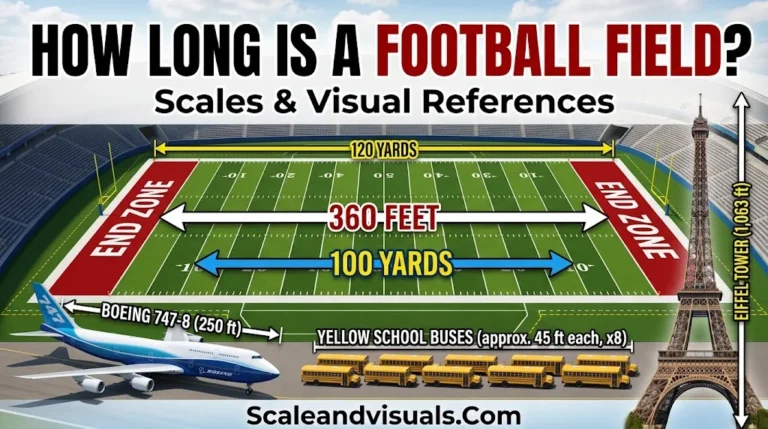
Understanding small measurements, such as credit card thickness, is useful for comparing everyday objects with much larger structures. For a fascinating change in scale, explore football field dimensions in feet and yards to see how one of the most familiar sports fields measures up against other impressive objects.
Why Credit Card Thickness Is Standardized
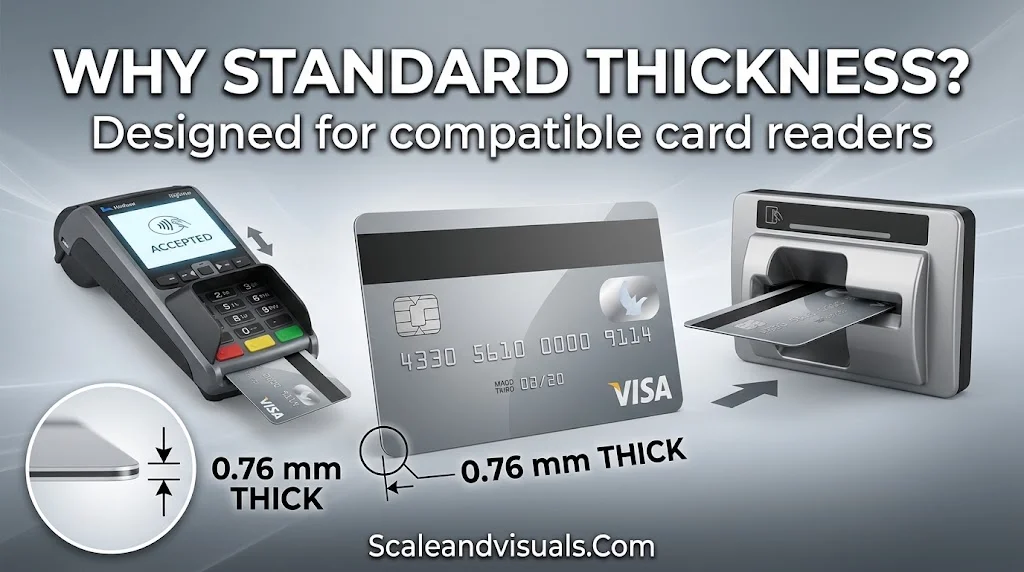
One shared thickness lets any card work in any machine. It also keeps your card safe from damage.
Why are all credit cards the same thickness? Machines are built for one size. ATMs, payment terminals, transit gates and card readers all expect the same card. If a card is too thick, it jams. If it is too thin, it may not seat well or read right.
At 0.76 mm, a card bends a little without cracking. It is also strong enough to last through years of swipes, dips and taps.
The standard also fixes where key parts sit:
- The magnetic stripe goes on the back.
- The EMV chip follows EMV specifications for size and position.
- Contactless cards work at the same thickness.
Wallets, phone-case card slots and card sleeves also use these dimensions. That is why a card fits almost any holder.
Credit Card Thickness by Material and Card Type
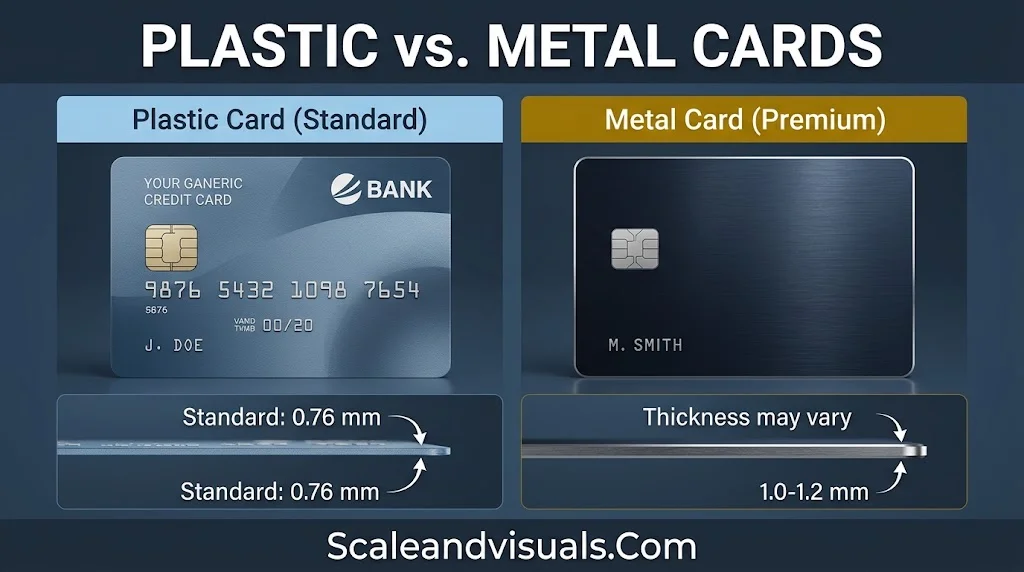
Most cards match the standard, but not every card in your wallet does. Material and purpose can change the feel.
Most bank cards use PVC plastic. Some use PVCA. A few issuers offer metal cards made from stainless steel, aluminum or titanium. They keep the same height and width. They just feel stiffer and heavier.
| Card type | Typical thickness | Notes |
|---|---|---|
| Standard plastic credit or debit card | 30 mil (0.76 mm) | Weighs about 5 g |
| Metal credit card | Near 0.76 mm or slightly more | Weighs about 10 to 18 g |
| Flexible plastic card | 20 to 24 mil | Bends easily |
| Thin card | 10 to 15 mil | Feels close to paper |
| Access or parking card | Above 30 mil | Built to be stiff |
Here are a few more facts worth knowing:
- Embossed cards have raised numbers, so they can feel thicker. Flat-printed cards are now more common.
- Some metal cards can catch in older ATMs, though most modern readers handle them fine.
- Eco-friendly cards use recycled PVC or bioplastics. They still follow the standard.
If you print gift cards or membership cards, 30 mil gives a true bank-card feel. Thinner stock costs less but feels flimsy.
FAQs
How thick is a credit card in mil?
A standard credit card is 30 mil thick. That equals 0.030 inch, or 0.76 mm. Thinner gift cards can run 10 to 24 mil.
How thin is a normal credit card?
A normal credit card is about 0.76 mm (0.03 inch) thin. That is close to the thickness of eight sheets of printer paper.
Is a credit card 4 inches?
No. A standard credit card is 3.375 inches long and 2.125 inches wide. That is about 8.56 cm by 5.4 cm. It falls short of 4 inches by more than half an inch.
Is a debit card 2 inches?
Not quite. A debit card has the same size as a credit card: 3.375 inches long and 2.125 inches tall. Only the height comes close to 2 inches.
Can I pay $10,000 with my debit card?
Maybe. It depends on your bank. Banks often set debit purchase limits between $2,000 and $7,000 per day, according to KeyBank. A limit can decline a purchase even when your account has enough money. You can ask your bank for a temporary or permanent increase, as Bankrate explains. For a $10,000 payment, call your bank first. Also check any limit set by the seller.
Conclusion
A standard credit card thickness is 0.76 mm, which is 0.03 inches or 30 mil. This shared size lets one card work in wallets, ATMs and readers worldwide. Metal, gift and access cards may differ a little, but the height and width stay the same.

Abroy Usman is a passionate digital content creator and visual enthusiast dedicated to making complex ideas easier to understand through clear, engaging, and visually appealing content. As an author at Scale & Visuals, he focuses on sharing practical insights, creative ideas, and useful information designed to help readers learn, grow, and make better digital decisions.