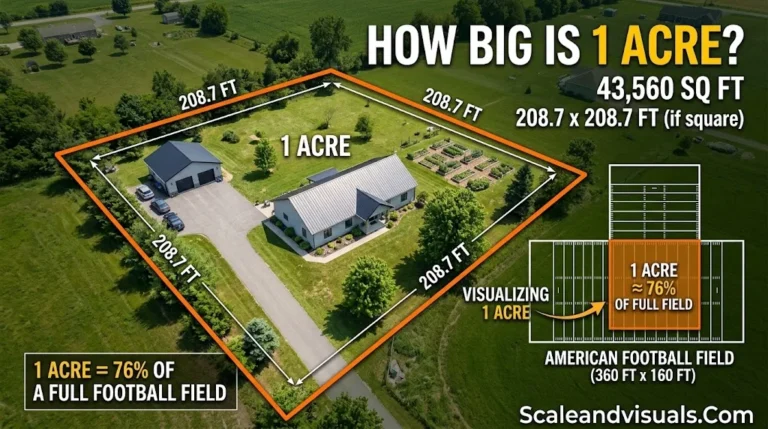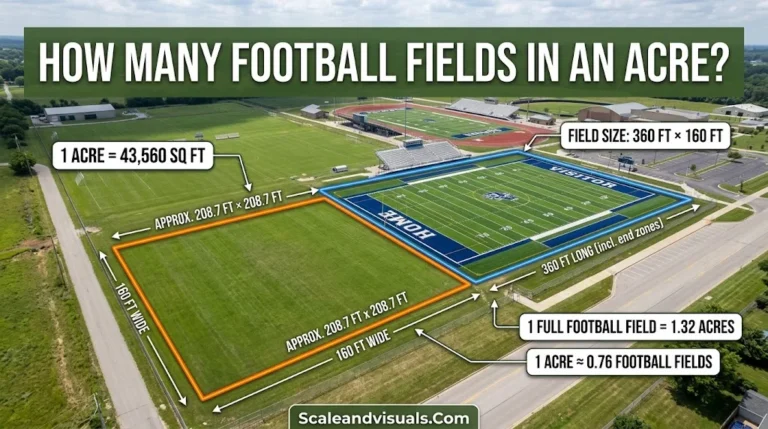
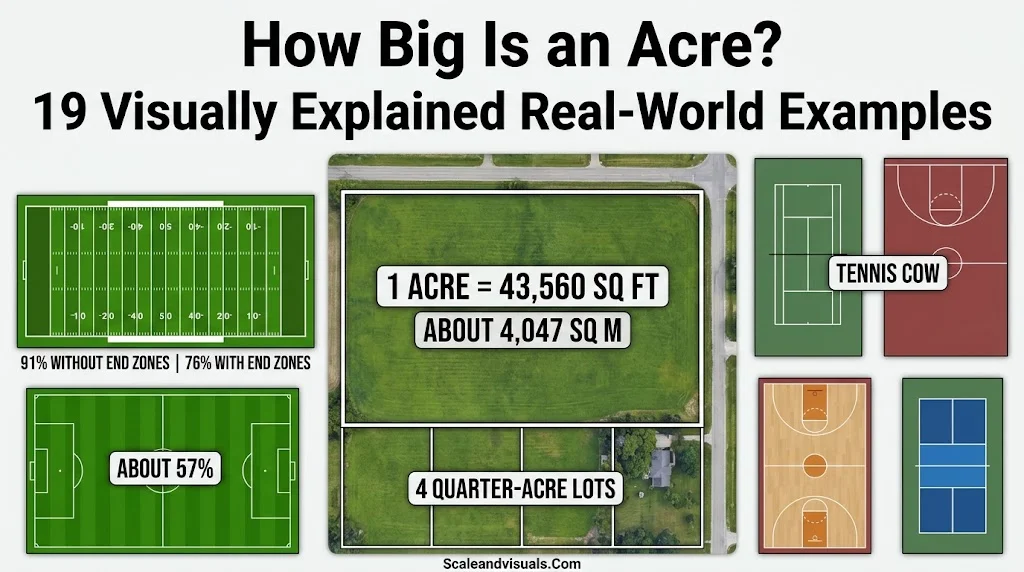
How big is an acre? An acre is 43,560 square feet. If it were a perfect square, each side would be about 208.7 feet, or roughly 70 yards.
That is about 91% of a football field without the end zones. It is about 76% of a full field with them. This guide shows what an acre looks like in 19 real-world examples. It also covers fractions of an acre and quick lot checks.
Understanding how big an acre is becomes much easier when you compare land measurements with familiar objects and real-world spaces. Explore more helpful size comparisons and measurement guides through Scale and Visuals to make everyday dimensions easier to understand.
Table of Contents
How Big Is an Acre in Square Feet and Dimensions
The acre size never changes, but its shape can. Here are the exact numbers.
| Unit | One acre equals |
|---|---|
| Square feet | 43,560 sq ft |
| Square yards | 4,840 sq yd |
| Square meters | About 4,046.86 sq m |
| Hectares | About 0.4047 ha |
| Square mile | 1/640 (640 acres in a square mile) |
| Square side | About 208.7 ft (63.6 m) |
An acre measures area, not length. So there is no set number of feet in an acre. A lot can be 208.7 by 208.7 feet. It can also be 150 by 290.4 feet, or 100 by 435.6 feet. All three are one acre.
Use this formula: length x width ÷ 43,560 = acres.
The acre began in medieval England. It was the land one farmer with a team of oxen could plow in a day. Its old shape was one furlong (660 feet) by one chain (66 feet). That strip still equals 43,560 square feet.
Most of the world uses hectares. The acre is common in the US and UK.
Price depends on use and place. USDA says average US farm real estate is worth $4,500 per acre in 2026. Cropland averages $6,020 per acre. Pasture averages $2,000.
Want to know your true acre? Do not trust your eyes. Check the recorded survey or plat. Boundaries follow the deed, not a pace count.
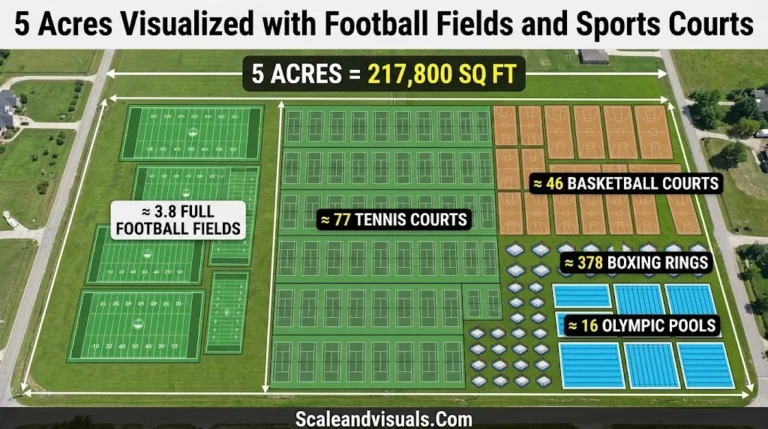
Understanding the size of a single acre makes it easier to visualize larger plots of land, too. If you want to see how these measurements scale up, explore real-world comparisons of 5 acres to discover how much space five acres provides for homes, sports fields, and other familiar landmarks.
19 Real-World Examples of How Big an Acre Is
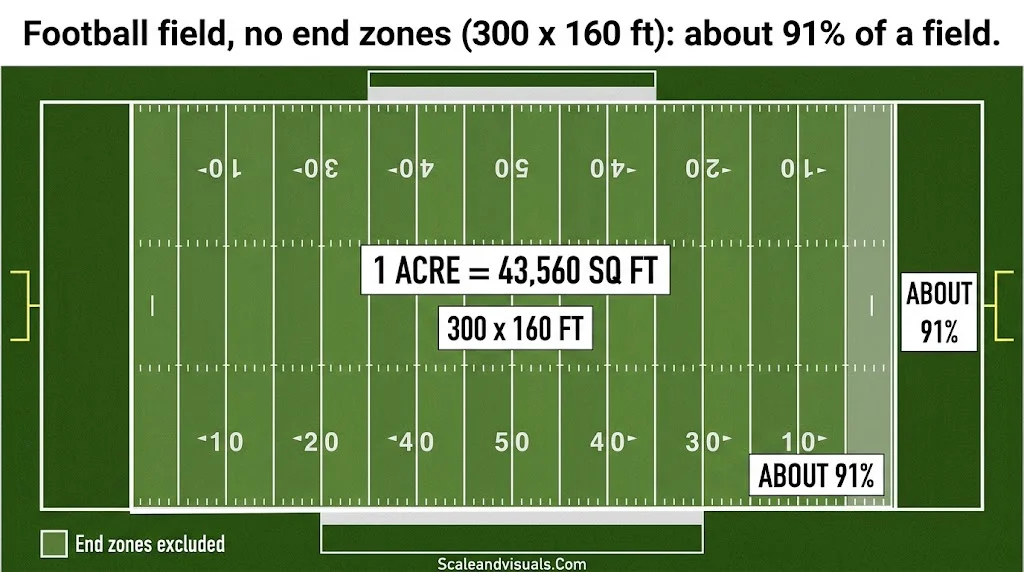
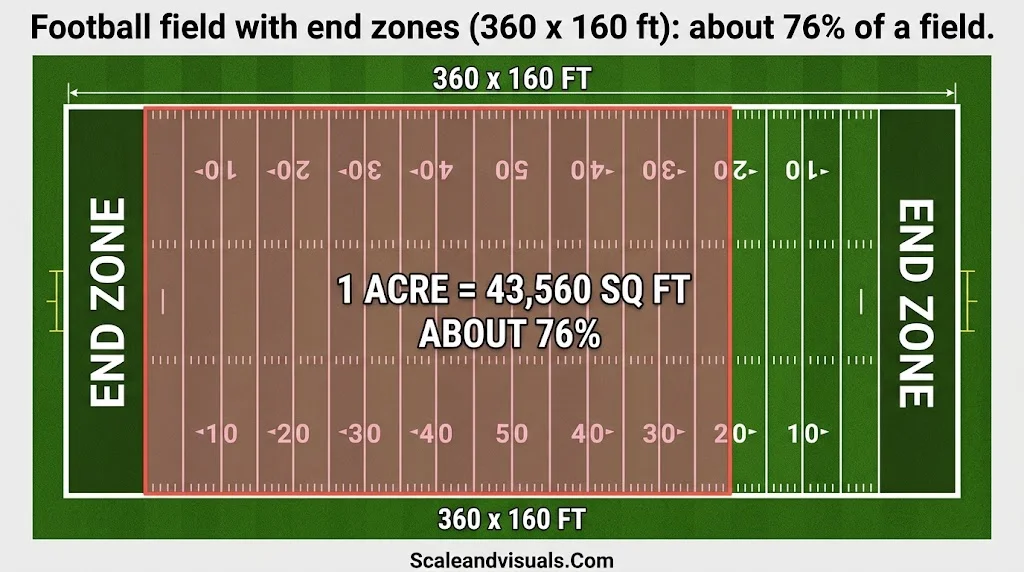
Always say whether the end zones count when you compare an acre to a football field. The answer changes from about 91% to about 76%.
Numbers are hard to picture. These visual comparisons show how big an acre of land is in places you know.
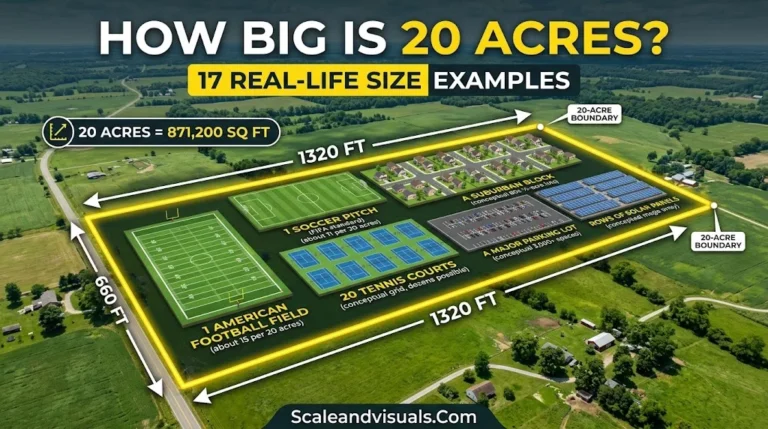
- Football field, no end zones (300 x 160 ft): about 91% of a field.
- Football field with end zones (360 x 160 ft): about 76% of a field.
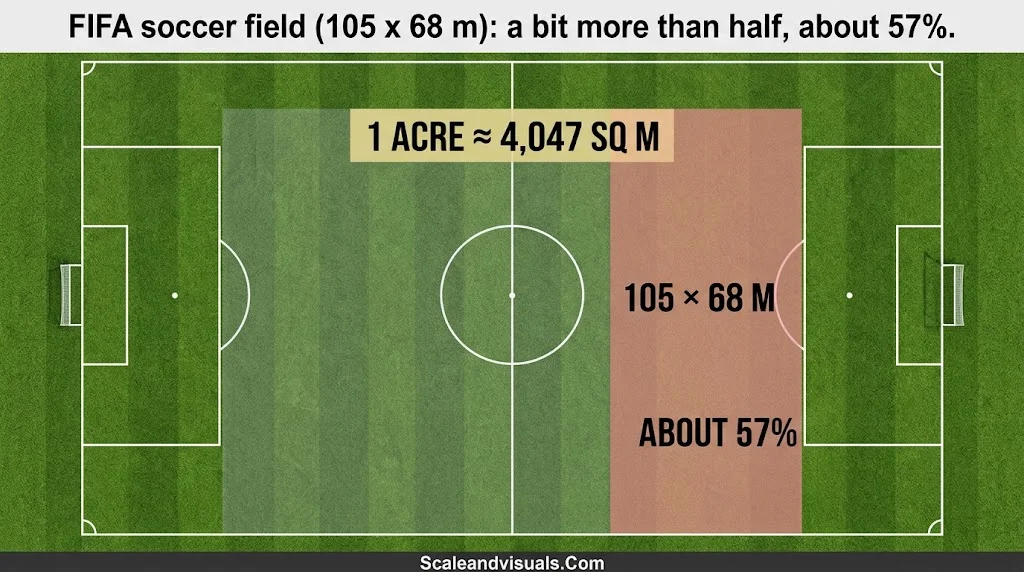
- FIFA soccer field (105 x 68 m): a bit more than half, about 57%.
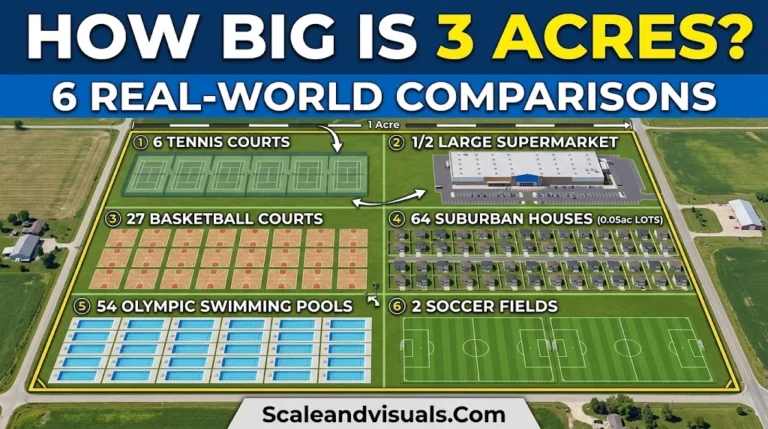
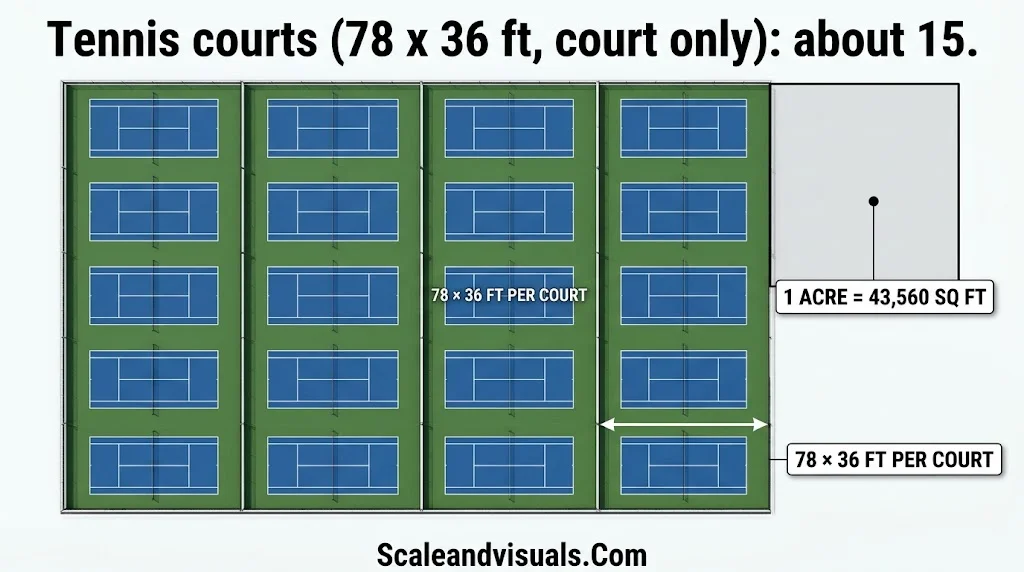
- Tennis courts (78 x 36 ft, court only): about 15.
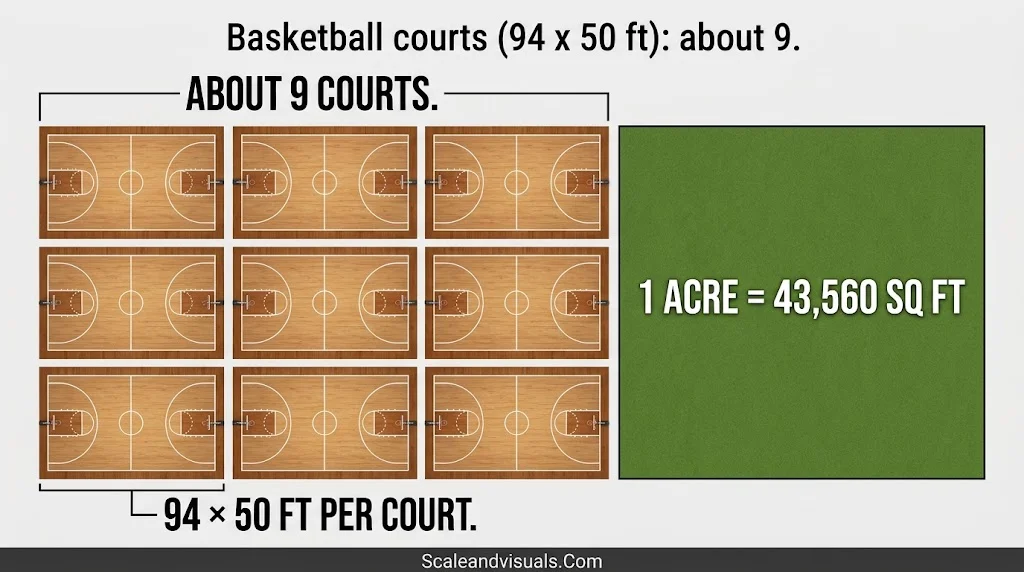
- Basketball courts (94 x 50 ft): about 9.
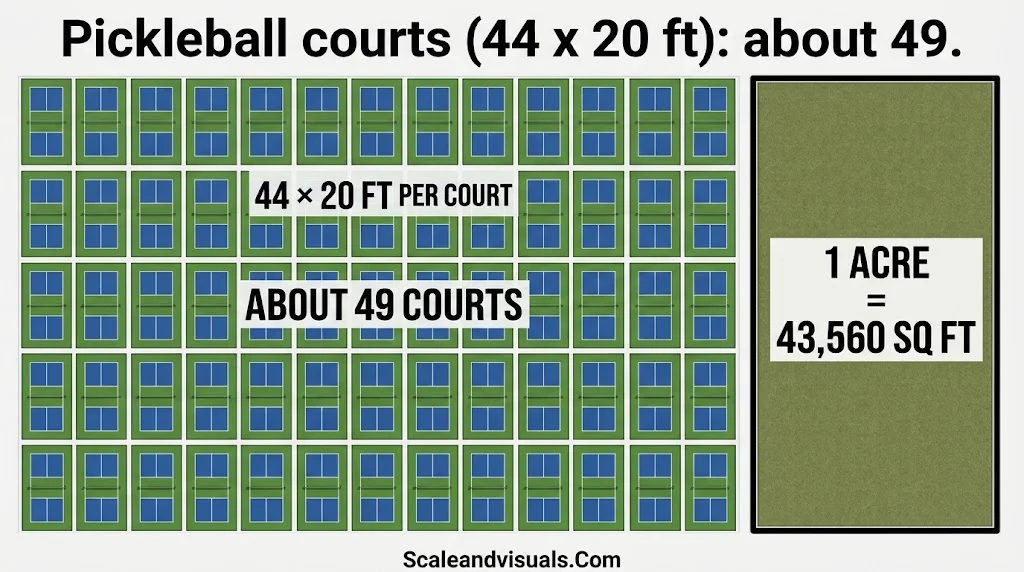
- Pickleball courts (44 x 20 ft): about 49.
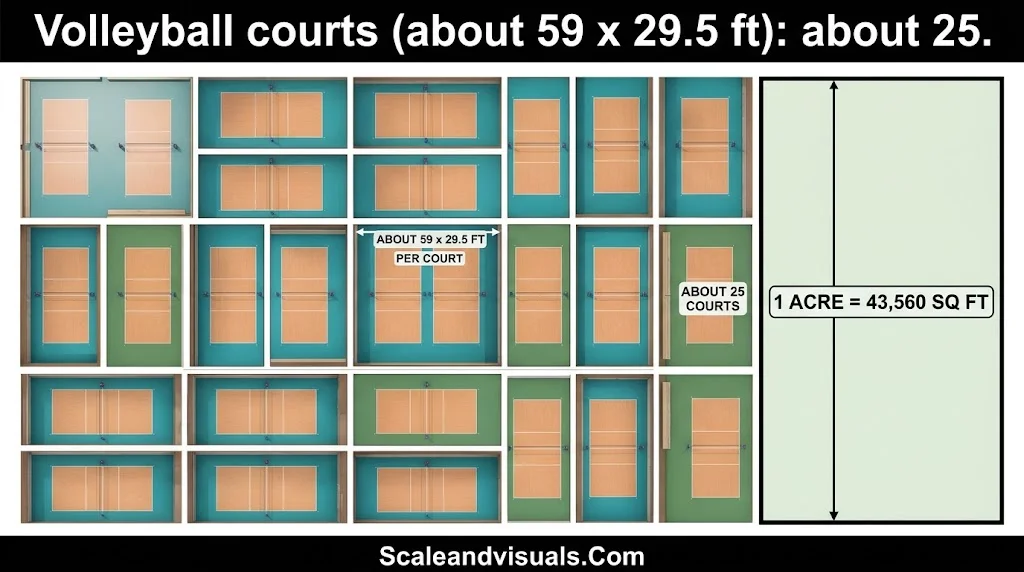
- Volleyball courts (about 59 x 29.5 ft): about 25.
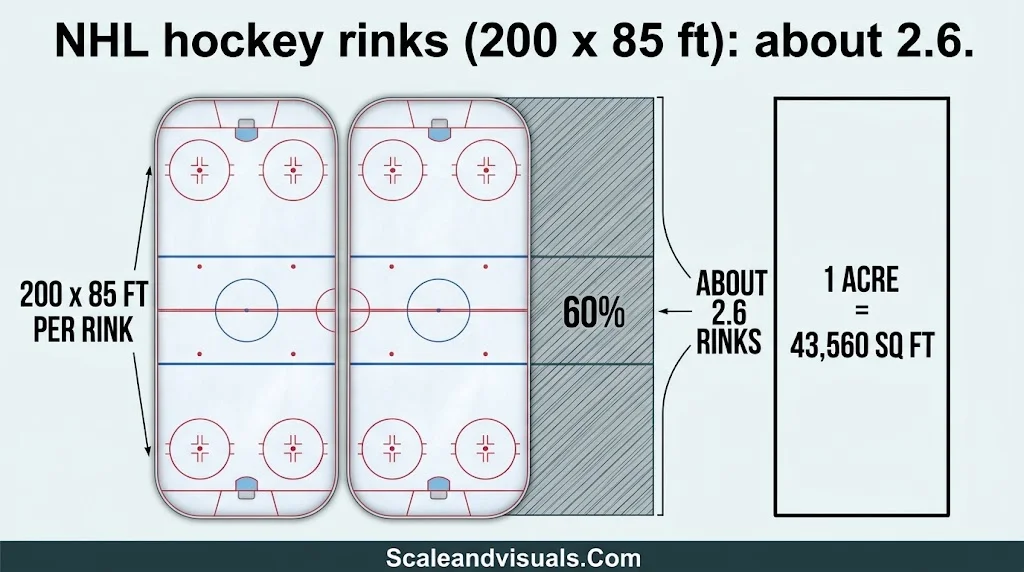
- NHL hockey rinks (200 x 85 ft): about 2.6.
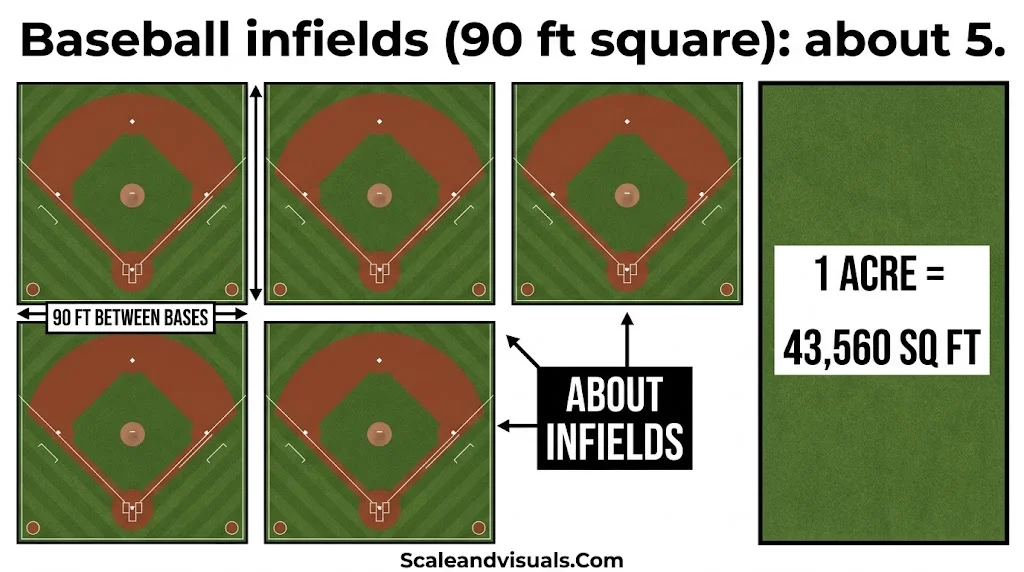
- Baseball infields (90 ft square): about 5.
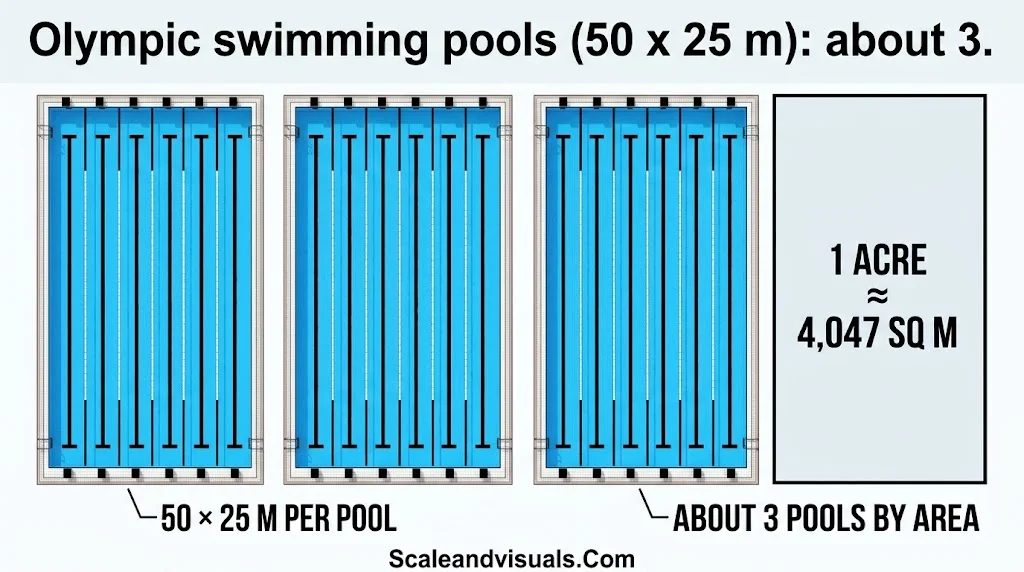
- Olympic swimming pools (50 x 25 m): about 3.
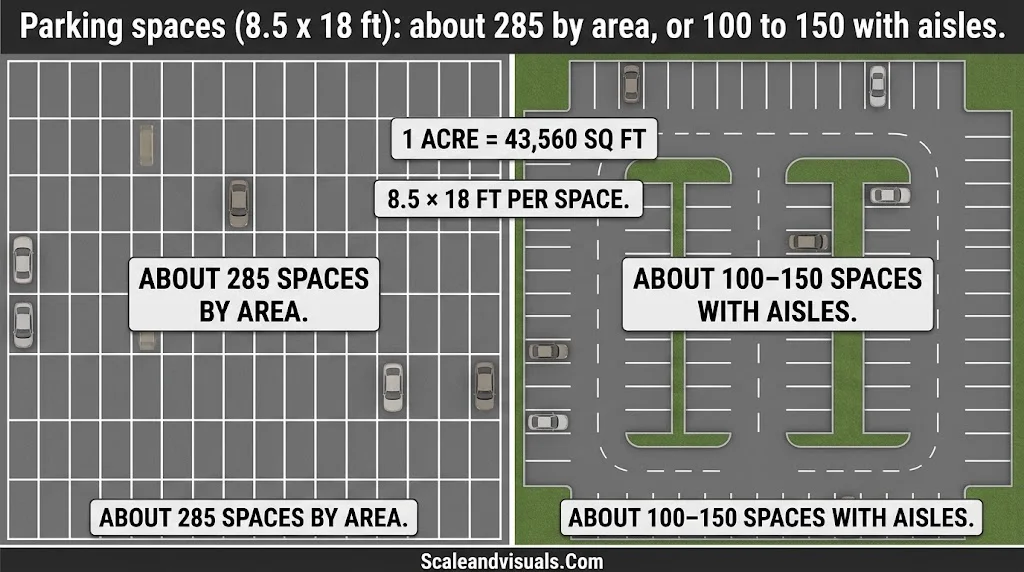
- Parking spaces (8.5 x 18 ft): about 285 by area, or 100 to 150 with aisles.
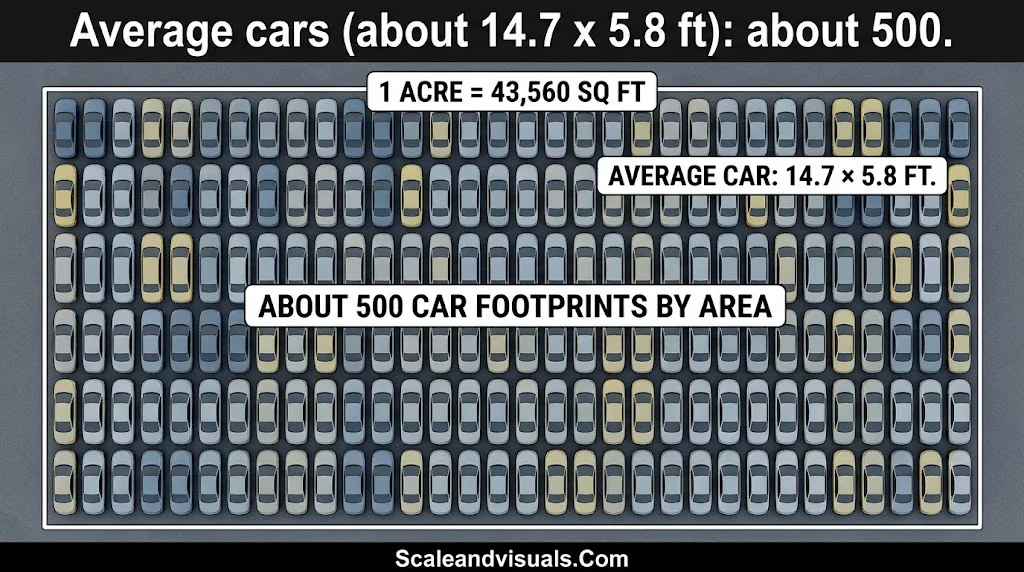
- Average cars (about 14.7 x 5.8 ft): about 500.
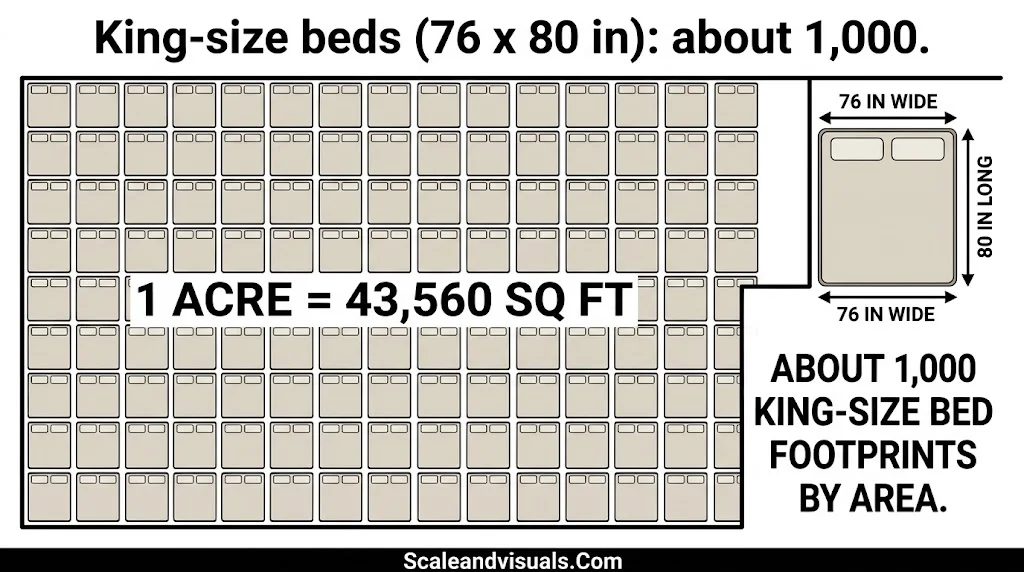
- King-size beds (76 x 80 in): about 1,000.
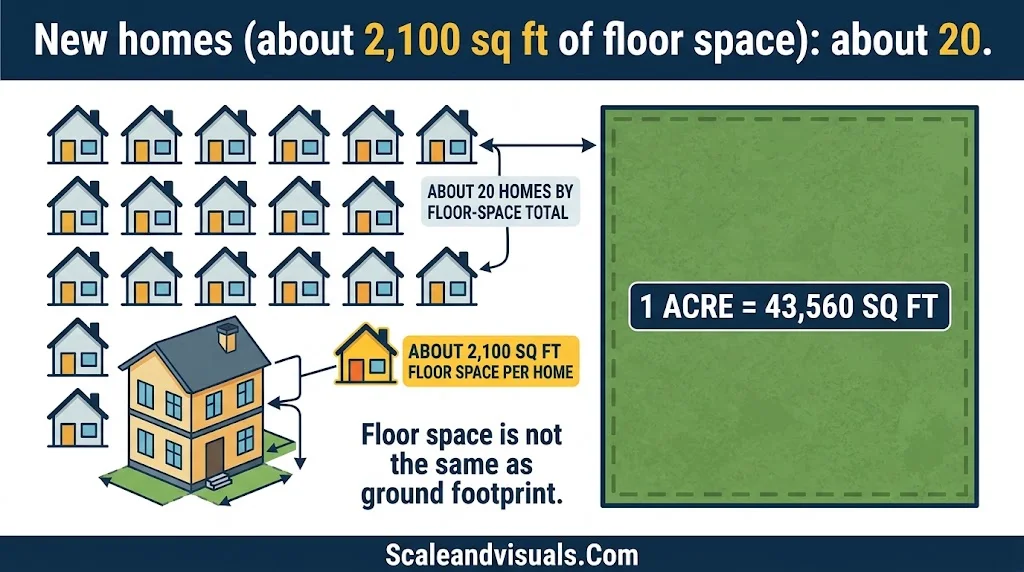
- New homes (about 2,100 sq ft of floor space): about 20.
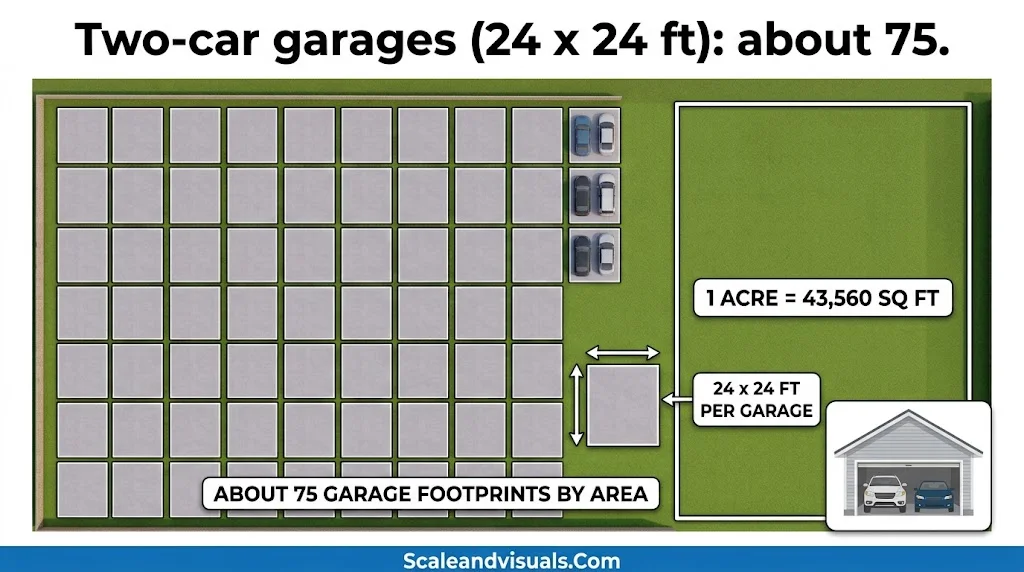
- Two-car garages (24 x 24 ft): about 75.
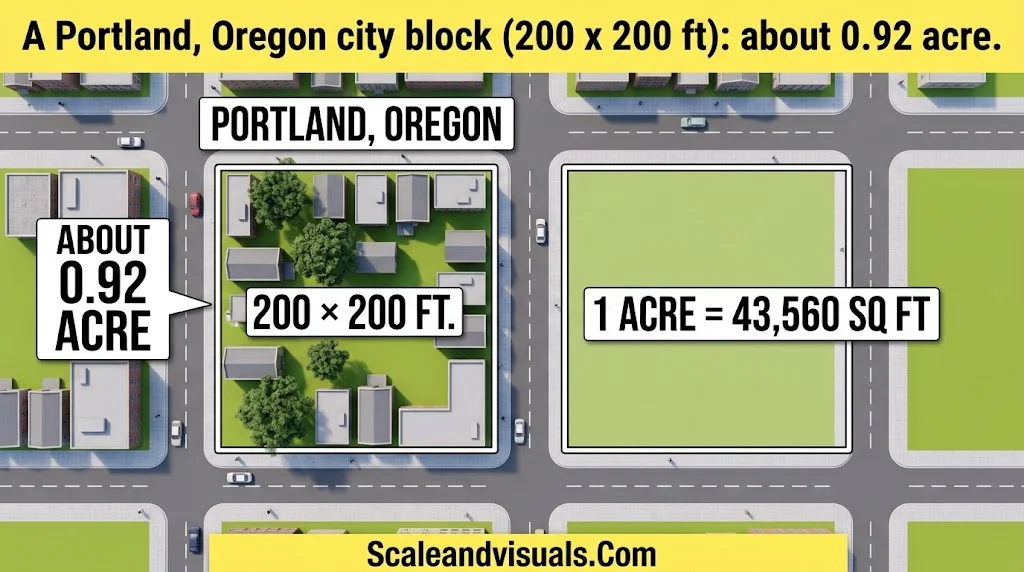
- A Portland, Oregon city block (200 x 200 ft): about 0.92 acre.
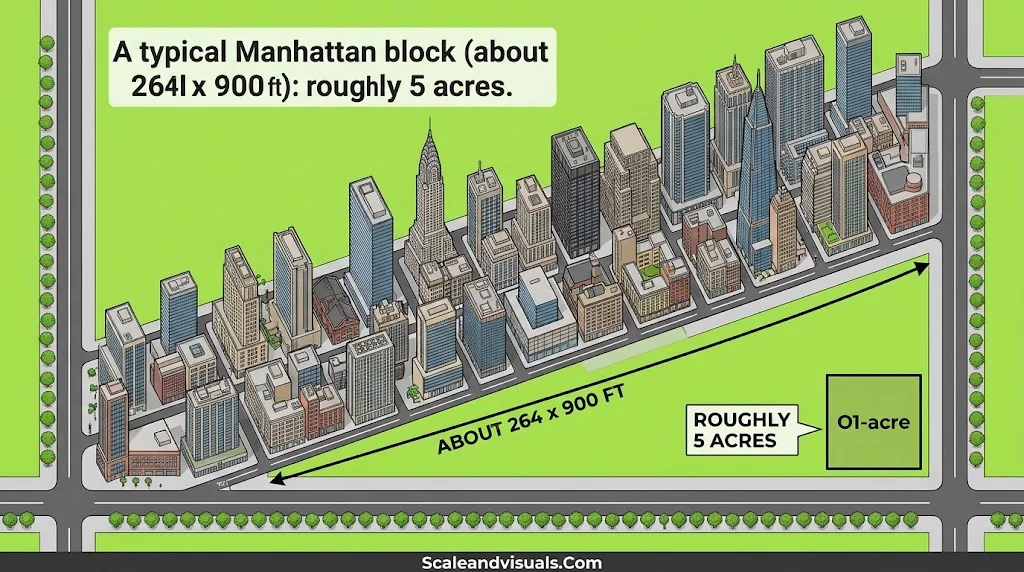
- A typical Manhattan block (about 264 x 900 ft): roughly 5 acres.
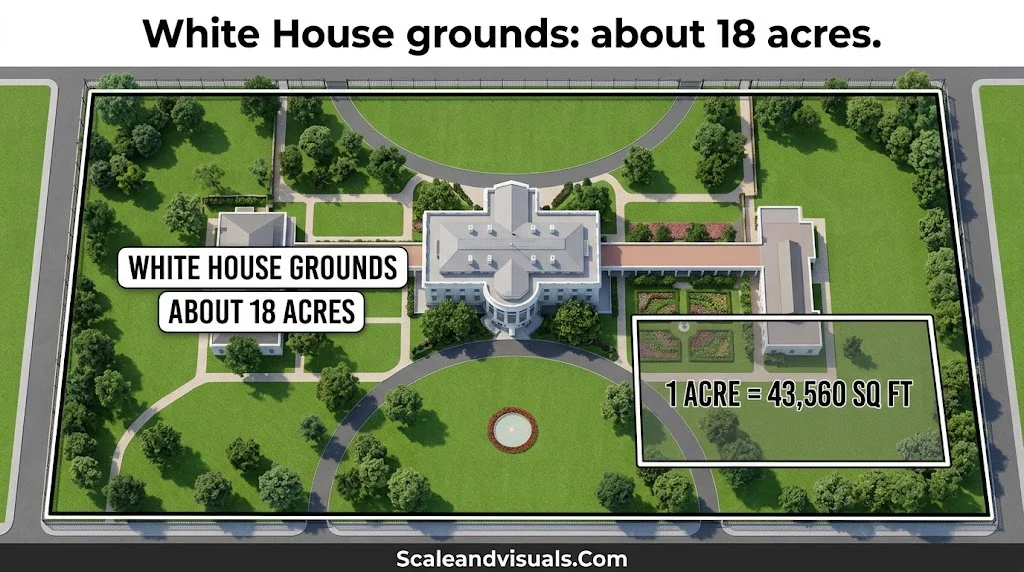
- White House grounds: about 18 acres.
- A suburban street of quarter-acre lots: 4 lots.
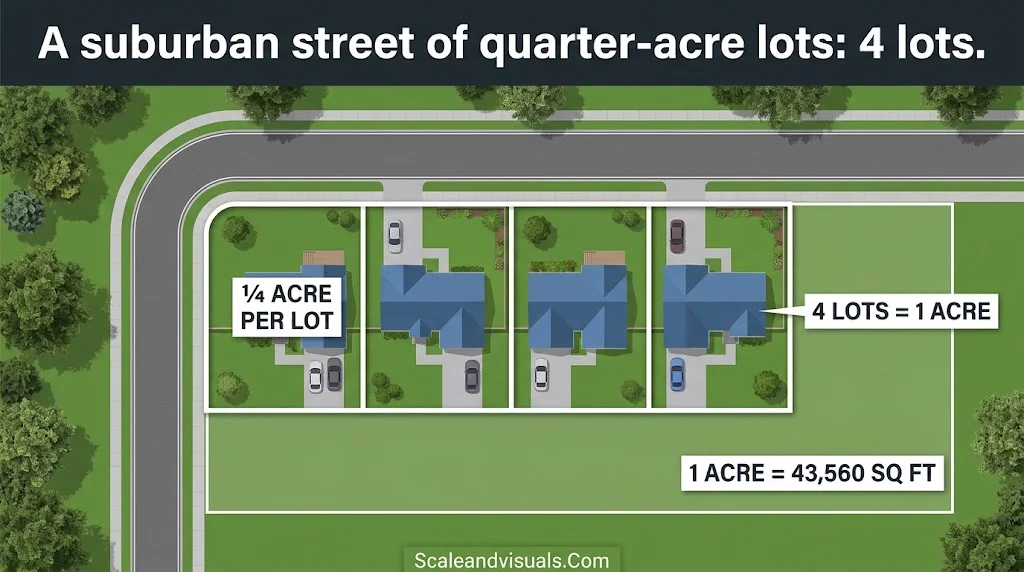
The new-home figure comes from the US Census Bureau’s housing data. Floor space is not the same as footprint, so a two-story home covers less ground.
Fractions of an Acre, Lot Shapes and Land Use
Most lots are smaller than a full acre. Shape also changes how an acre feels. Here are common acre lot sizes.
| Fraction | Square feet | Square side |
|---|---|---|
| 3/4 acre | 32,670 sq ft | About 180.7 ft |
| 1/2 acre | 21,780 sq ft | About 147.6 ft |
| 1/3 acre | 14,520 sq ft | About 120.5 ft |
| 1/4 acre | 10,890 sq ft | About 104.4 ft |
| 1/8 acre | 5,445 sq ft | About 73.8 ft |
| 1/10 acre | 4,356 sq ft | About 66 ft |
Lot shape matters. A wide lot gives more road frontage. A deep, narrow lot puts the home far from the street. Shape affects driveways, gardens, and setbacks.
Is an acre big enough to build on? Yes, in most cases. But zoning, setbacks, utilities, septic, and drainage decide what you can build. Most areas allow one to four homes per acre. Dense developments allow more.
Avoid these common mistakes:
- Treating an acre as a length instead of an area.
- Assuming an acre is always square.
- Rounding 200 by 200 feet up to an acre.
- Mixing up football field comparisons with and without end zones.
FAQs
What is the actual size of 1 acre?
One acre is 43,560 square feet. That is about 4,047 square meters. A square acre is about 208.7 feet on each side.
What does 1 acre look like?
Picture a square about 209 feet on each side. It is also about three-quarters of a football field with the end zones. Think of five baseball infields or about 15 tennis courts.
How many football fields fit in an acre?
Less than one. An acre is about 91% of a football field without end zones. With the end zones, it is about 76%.
Is 200 ft by 200 ft 1 acre?
No. A 200 by 200 foot lot is 40,000 square feet. That is about 0.92 acre.
Is 300 ft by 300 ft 1 acre?
No. A 300 by 300 foot lot is 90,000 square feet. That is about 2.07 acres.
Is an acre 220 ft by 220 ft?
No. A 220 by 220 foot lot is 48,400 square feet. That is about 1.11 acres. A true square acre is about 208.7 by 208.7 feet.
Conclusion
An acre is 43,560 square feet, or about 209 by 209 feet if square. It is an area, so its shape can vary. Compare it to fields, courts, and city blocks to picture it. Before you buy or build, check the survey for the true boundary.

Abroy Usman is a passionate digital content creator and visual enthusiast dedicated to making complex ideas easier to understand through clear, engaging, and visually appealing content. As an author at Scale & Visuals, he focuses on sharing practical insights, creative ideas, and useful information designed to help readers learn, grow, and make better digital decisions.