
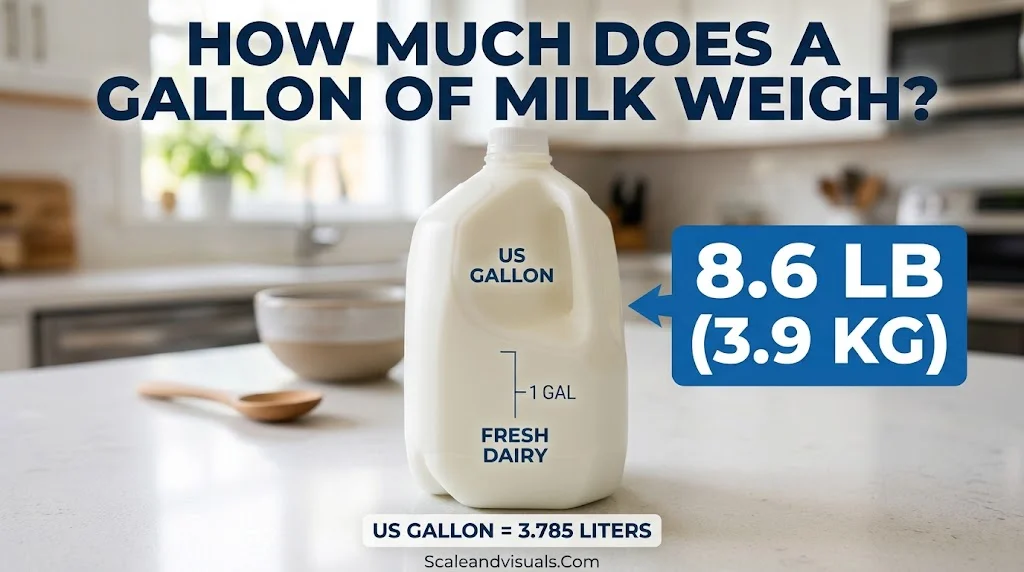
How much does a gallon of milk weigh? A US gallon of whole milk weighs about 8.6 pounds (3.9 kg). That is a little more than most people guess.
The exact gallon of milk weight shifts a bit by milk type, container and country. This guide gives you the numbers, the science and quick tips you can use today.
Understanding the weight of everyday liquids like milk can make common measurements easier to visualize, especially when comparing gallons, pounds, and real-world quantities. At Scale and Visuals, you can explore more practical size, weight, and measurement comparisons that make everyday numbers easier to understand.
Table of Contents
How Much does a Gallon of Milk Weigh in Pounds?
A US gallon of milk weighs about 8.6 pounds (3.9 kg). To understand this weight more easily, let’s compare different amounts of milk with familiar containers and quantities.
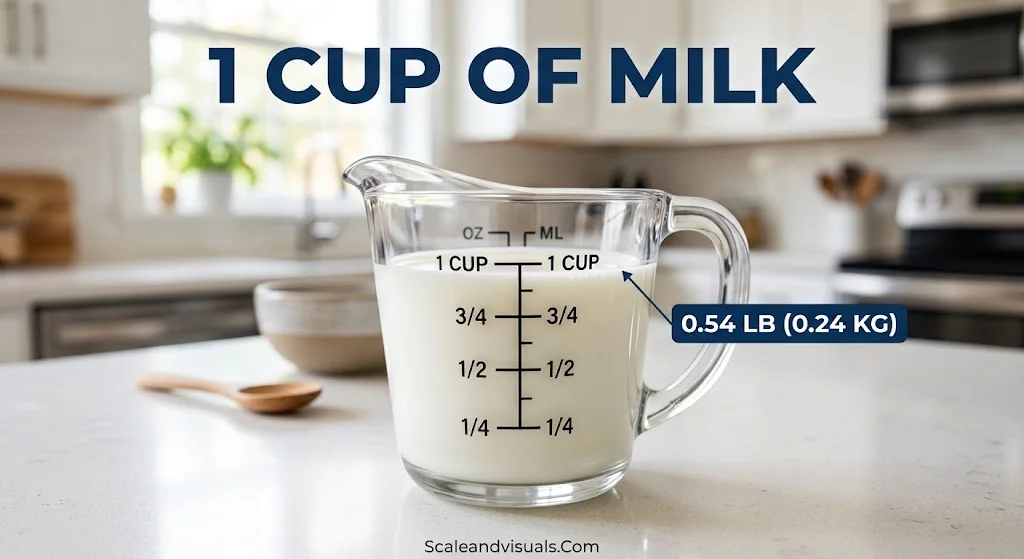
1 Cup of Milk (0.54 lb): Imagine a standard measuring cup filled with milk. It weighs approximately 0.54 pounds (0.24 kg), making it a lightweight amount you can easily hold in one hand.
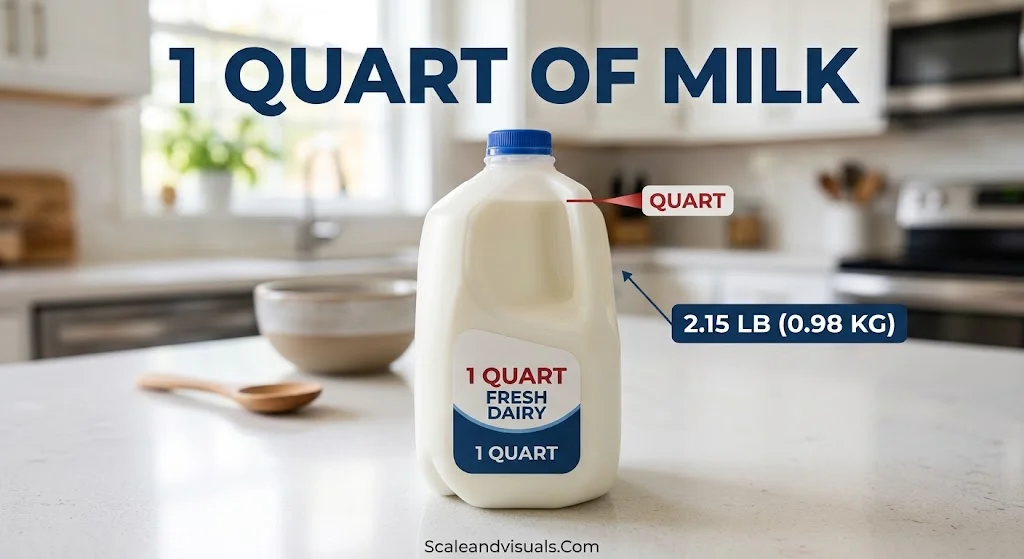
1 Quart of Milk (2.15 lb): A quart-sized milk carton or container weighs about 2.15 pounds (0.98 kg). Think of a small milk container you might buy at a grocery store.
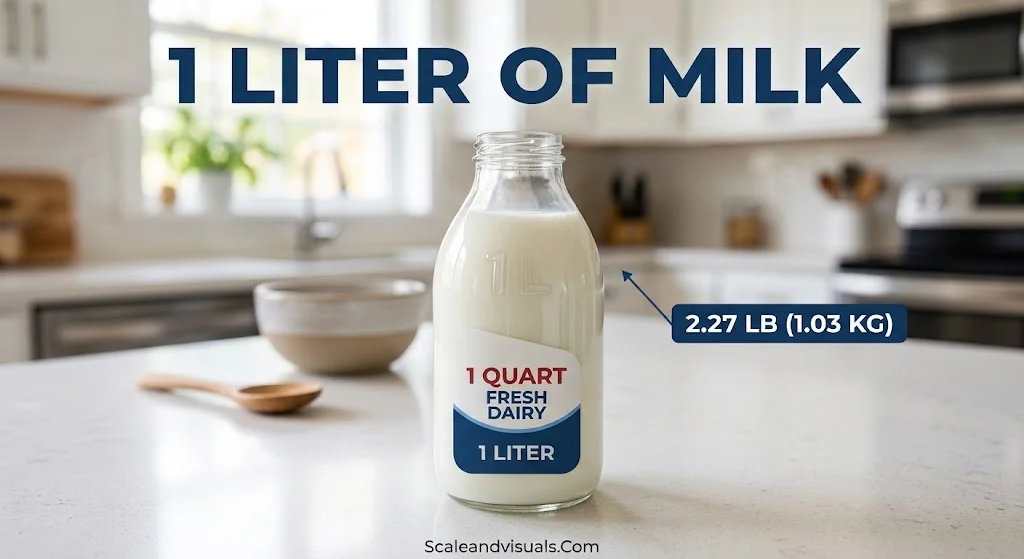
1 Liter of Milk (2.27 lb): A standard 1-liter milk bottle weighs around 2.27 pounds (1.03 kg). This is slightly heavier than a 1-liter bottle of water.
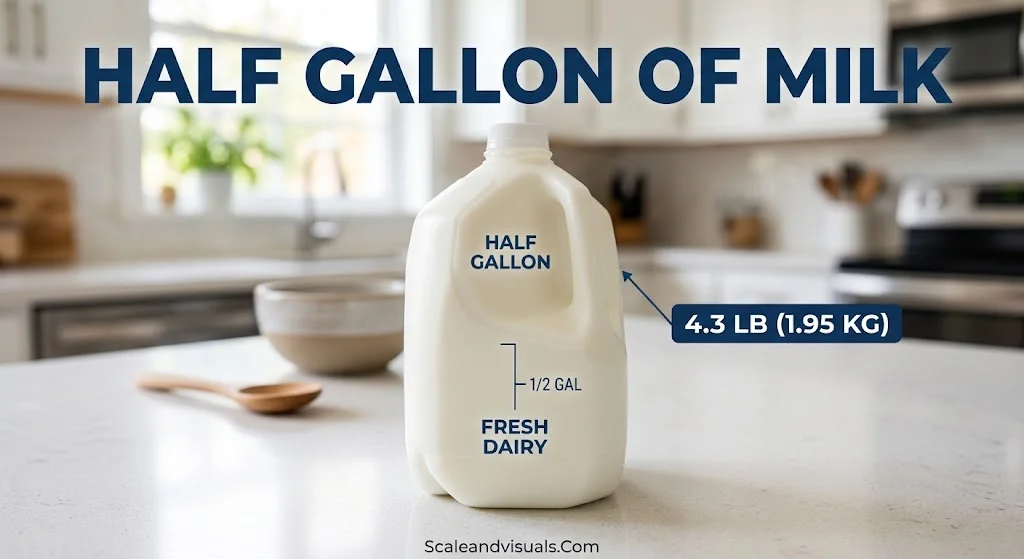
Half Gallon of Milk (4.3 lb): Picture a half-gallon milk jug commonly found in grocery stores. When filled, it weighs approximately 4.3 pounds (1.95 kg), making it easy to carry with one hand.
1 Gallon of Milk (8.6 lb): A full gallon-sized plastic milk jug weighs approximately 8.6 pounds (3.9 kg) without including the container’s weight. It is similar to carrying a moderately heavy grocery bag.

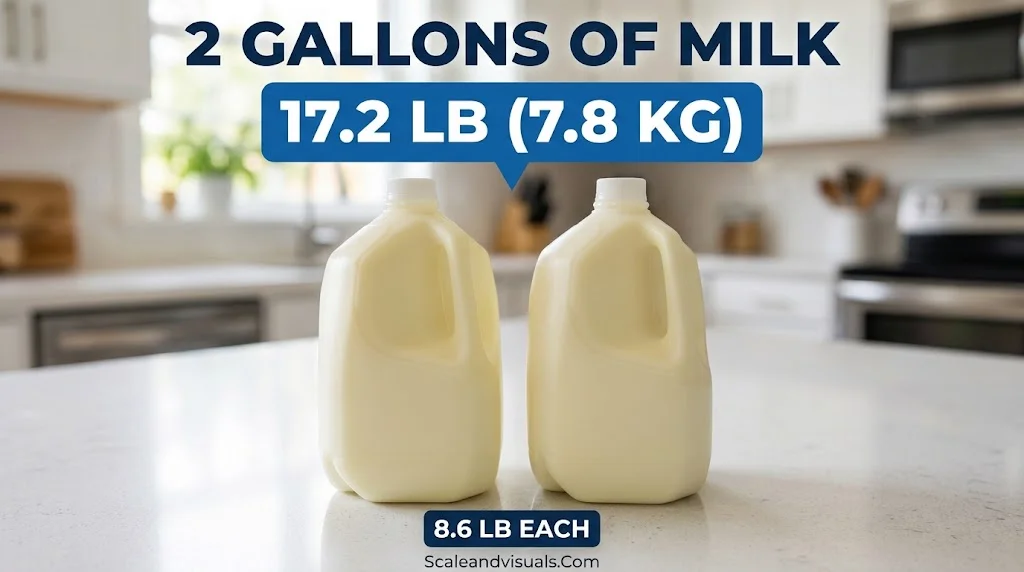
2 Gallons of Milk (17.2 lb): Imagine carrying two full gallon-sized milk jugs together. Their combined milk weight is about 17.2 pounds (7.8 kg), similar to carrying a heavy grocery bag.
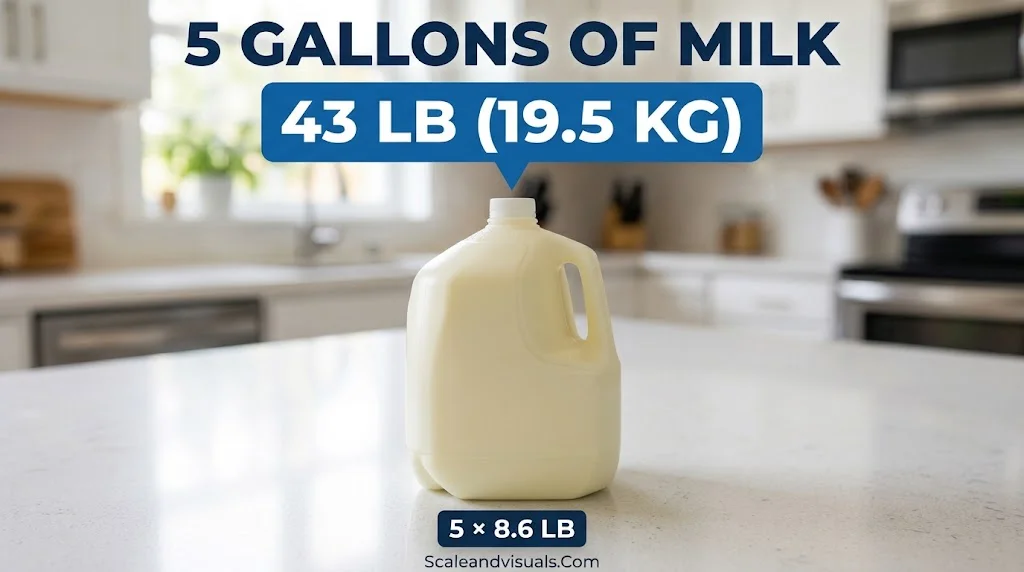
5 Gallons of Milk (43 lb): A large five-gallon food-grade container filled with milk weighs approximately 43 pounds (19.5 kg). That’s a substantial load, similar to carrying a large bag of pet food.
Quick takeaway: One cup of milk weighs about half a pound, while a full US gallon weighs around 8.6 pounds. These everyday comparisons make it easier to picture how milk weight increases as the quantity grows.nds.”
Why does the weight of a gallon of milk matter?
Two gallons in one grocery bag top 17 lbs. Four gallons come close to 35 lbs. That is worth knowing before you carry them, pack a cooler or plan an RV trip.
How can you weigh a gallon of milk at home?
Set the jug on a kitchen scale. Note the full weight. Then weigh the empty jug and subtract. An empty plastic jug adds only a few ounces.
Gallon of Milk Weight by Milk Type?
Every kind of cow’s milk lands very close to 8.6 lbs. Other drinks can differ a bit more.
Does skim milk weigh less than whole milk?
No. Milk fat is lighter than water, so removing it makes milk slightly denser. Skim milk is a hair heavier than whole milk. The gap is well under 0.1 lb per gallon.
| Type of milk | Approx. weight per gallon |
|---|---|
| Whole milk (3.25% fat) | 8.6 lb |
| 2% reduced-fat milk | 8.6 lb |
| 1% low-fat milk | 8.6 lb |
| Skim (nonfat) milk | 8.6 lb |
| Chocolate milk | 8.8 lb |
| Almond milk | 8.5 lb |
| Heavy cream | 8.4 lb |
These are averages. Brands and recipes vary, so labels may differ slightly.
Does temperature change the weight of milk?
Only a little. Cold milk is slightly denser than warm milk. The shift is under 1%.
The container matters more. A plastic jug adds a few ounces. A glass bottle can add well over a pound.
Is a Gallon of Milk Heavier Than Water?
Yes. A gallon of milk is about 3% heavier than a gallon of water. Here is why.
A gallon of water weighs about 8.34 lbs. The USGS Water Science School explains how water density works. Milk comes in near 8.6 lbs. That is about 0.26 lb more.
Milk is roughly 88% water. The rest is protein, lactose, minerals and fat. Protein, lactose and minerals are denser than water. They pull the total weight up. Fat alone would pull it down.
A gallon of milk weighs approximately 8.6 pounds, making it easier to understand how everyday food quantities add up. If you’re curious about how different foods compare at a similar weight, explore these 10-pound food portions and realistic serving comparisons to see what that amount looks like in familiar groceries.
Is a UK gallon of milk heavier than a US gallon?
Yes. An imperial gallon is 4.546 liters. That is about 20% bigger than a US gallon. It holds about 10.3 lbs (4.7 kg) of milk. This is where the “10 lb” idea comes from.
Canada sells milk in 4-liter jugs. Those weigh about 9.1 lbs.
| Gallon type | Milk | Water |
|---|---|---|
| US gallon | 8.6 lb | 8.34 lb |
| Imperial (UK) gallon | 10.3 lb | 10.02 lb |
FAQs
Is a gallon of milk 10 lb?
No. A US gallon of milk weighs about 8.6 lbs. The 10 lb figure fits the larger UK imperial gallon, which holds about 10.3 lbs of milk.
How heavy is 1 gallon of milk in pounds?
About 8.6 lbs (3.9 kg) for whole milk. Reduced-fat and skim milk weigh nearly the same. An empty plastic jug adds just a few ounces.
Which is heavier, a gallon of milk or water?
Milk. A gallon of milk weighs about 8.6 lbs. A gallon of water weighs about 8.34 lbs. Protein, lactose and minerals make milk denser than water.
How heavy is 2 gallons of milk?
About 17.2 lbs (7.8 kg). Three gallons weigh about 25.8 lbs.
How heavy is one litre of milk?
About 1.03 kg, or 2.27 lbs. A liter of water weighs 1 kg, or 2.2 lbs. So milk is only slightly heavier.
Conclusion
A US gallon of milk weighs about 8.6 lbs (3.9 kg). Milk type barely changes that number. Milk is about 3% heavier than water. The UK imperial gallon is bigger, at about 10.3 lbs. Keep “just under 9 pounds” in mind and you will rarely be off.

Abroy Usman is a passionate digital content creator and visual enthusiast dedicated to making complex ideas easier to understand through clear, engaging, and visually appealing content. As an author at Scale & Visuals, he focuses on sharing practical insights, creative ideas, and useful information designed to help readers learn, grow, and make better digital decisions.