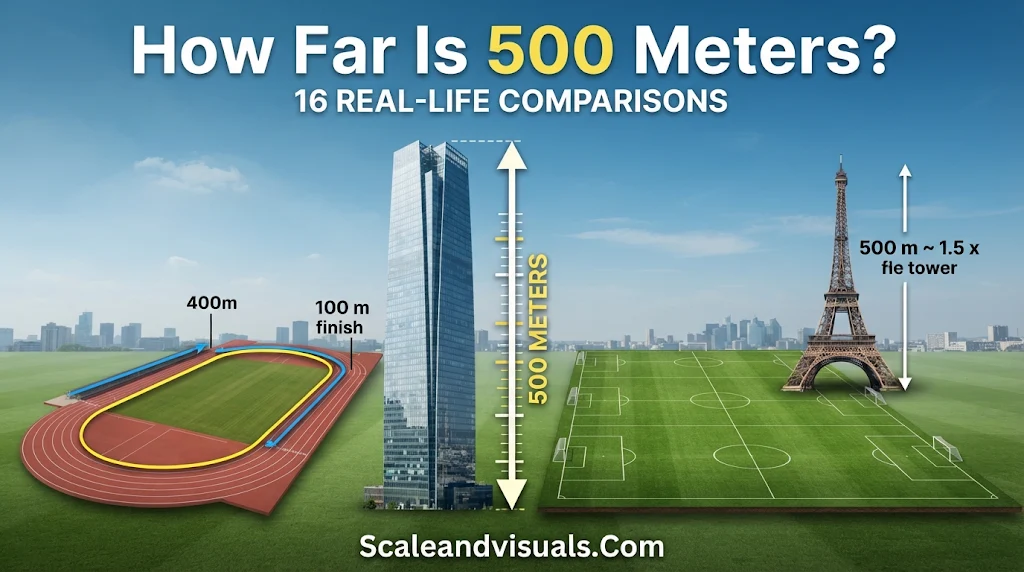
How far is 500 meters? It is half a kilometer. That equals about 1,640 feet, 546.8 yards, or 0.31 miles. Numbers alone are hard to picture. Below, you will find quick conversions, 16 easy comparisons, 500 meters walking time, and clear answers to common questions.
Understanding 500 meters through real-world comparisons makes it easier to visualize everyday distances and measurements. For more helpful visual explanations of sizes, lengths, weights, and distances, explore Scale and Visuals, where everyday measurements are broken down into simple, relatable examples.
Table of Contents
How Far Is 500 Meters in Feet, Miles and Yards?
Here is the 500 meters in feet answer, plus miles and yards. The values come from the standard meter definition kept by NIST.
| Unit | 500 Meters Equals |
|---|---|
| Kilometers | 0.5 km |
| Feet | 1,640.42 ft |
| Yards | 546.81 yd |
| Miles | 0.31 mi |
| Centimeters | 50,000 cm |
| Inches | 19,685 in |
To convert, multiply meters by 3.28084. So 500 × 3.28084 = 1,640.42 feet. For a quick guess, multiply by 3.3. Do not mix up the units. 500 feet is only 152.4 meters. 500 yards is 457.2 meters. 500 meters is the longest of the three. Here is another way to think about it. One mile is about 1,609 meters. So it takes just over three 500-meter stretches to make a mile.
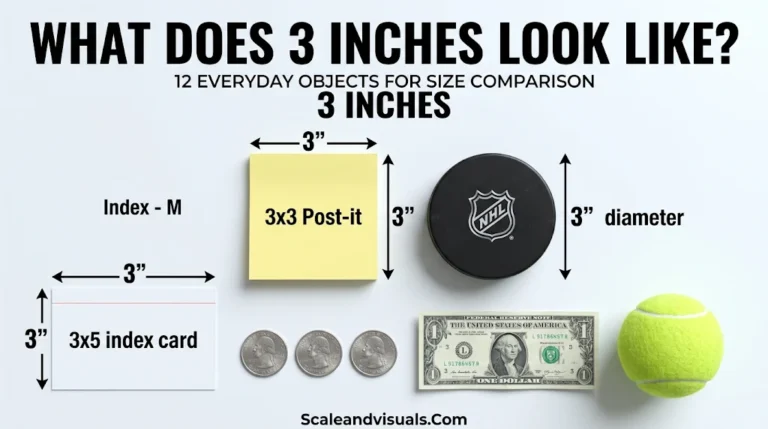
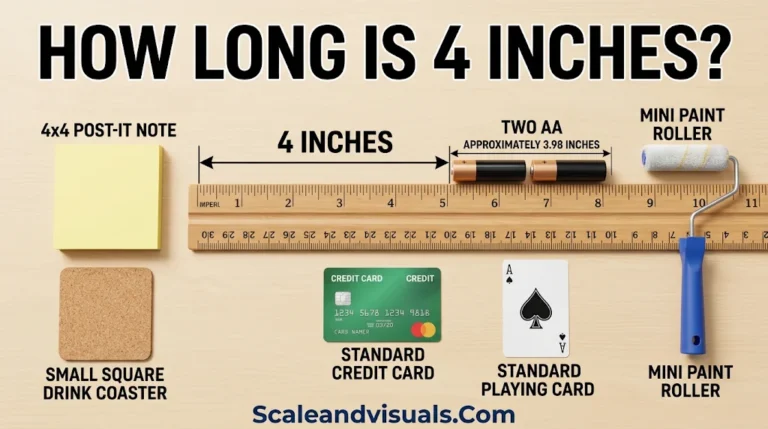
Just as visualizing 500 meters makes long distances easier to understand, comparing everyday measurements helps put smaller lengths into perspective. You can explore familiar household objects and discover what 12 inches looks like in everyday life through simple, relatable comparisons.
500 Meters in Real Life: 16 Easy Comparisons
These examples turn how long is 500 meters into a picture you can see. Each one uses a standard, checkable measurement.
- Ten Olympic swimming pools. A pool built to World Aquatics standards is 50 meters long. Ten in a row make 500 meters.

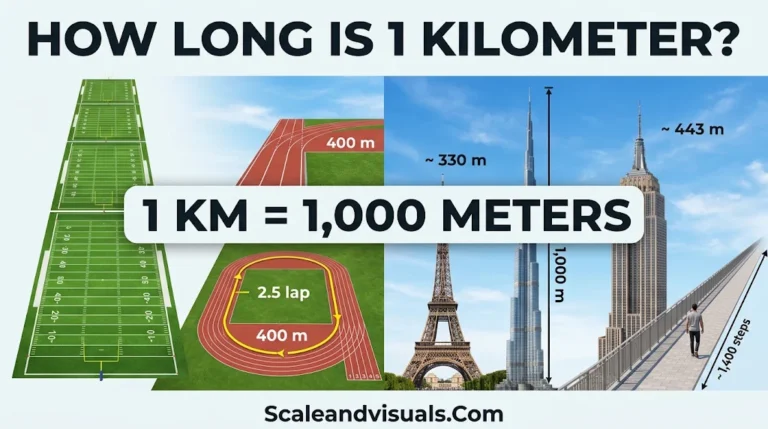
- Five soccer pitches. International pitches run about 100 to 110 meters, per FIFA. Five end to end come close to 500 meters.

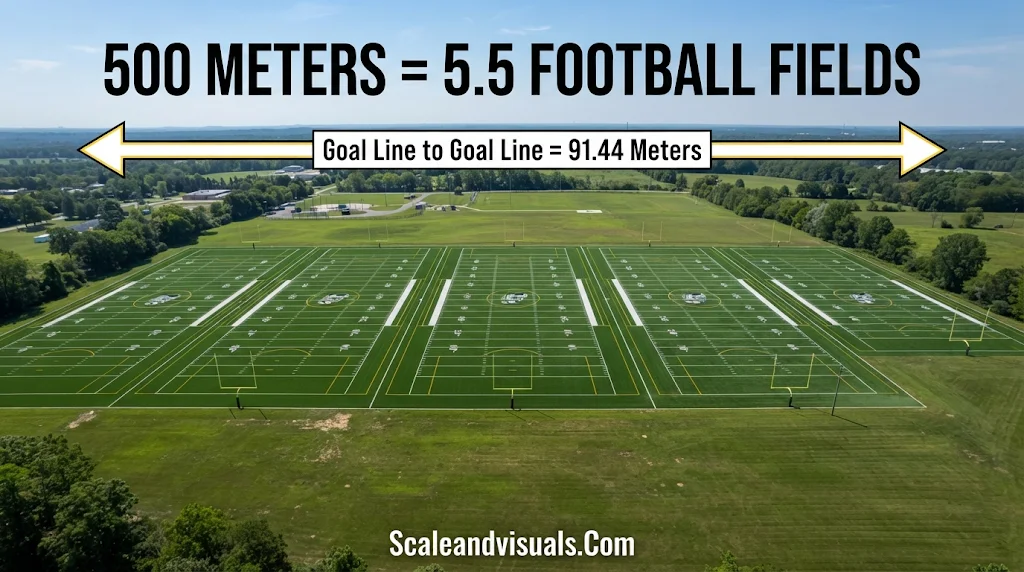
- About 5½ American football fields. The field is 100 yards (91.44 meters) between the goal lines, per the NFL. So 500 meters is about 5.5 fields.
- One track lap plus 100 meters. A standard outdoor track is 400 meters, per World Athletics. On a 200-meter indoor track, 500 meters is 2½ laps.
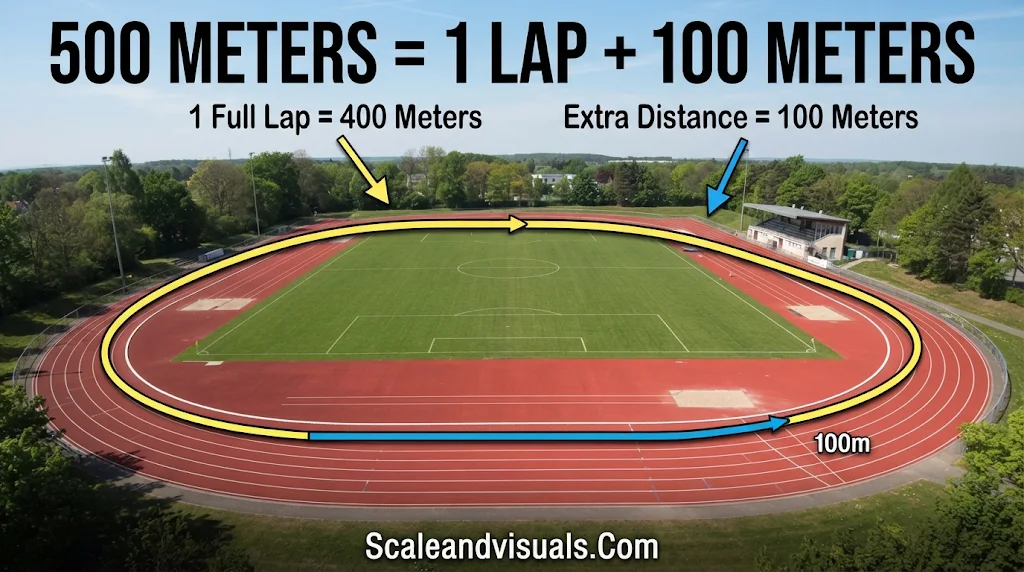
- Five 100-meter sprints. The 100-meter dash is the best-known sprint race. Picture five of them lined up.

- About six short Manhattan blocks. A typical north-south block in the street grid is about 264 feet (80 meters). Six of them are close to 500 meters.

- Four and a half laps of a short track speed skating rink. The rink loop is 111.12 meters. The 500-meter race is 4½ laps.

- Shanghai World Financial Center. It stands 492 meters tall. That is almost exactly 500 meters.

- One World Trade Center. The New York tower is 541 meters (1,776 feet). It is a little taller than 500 meters.
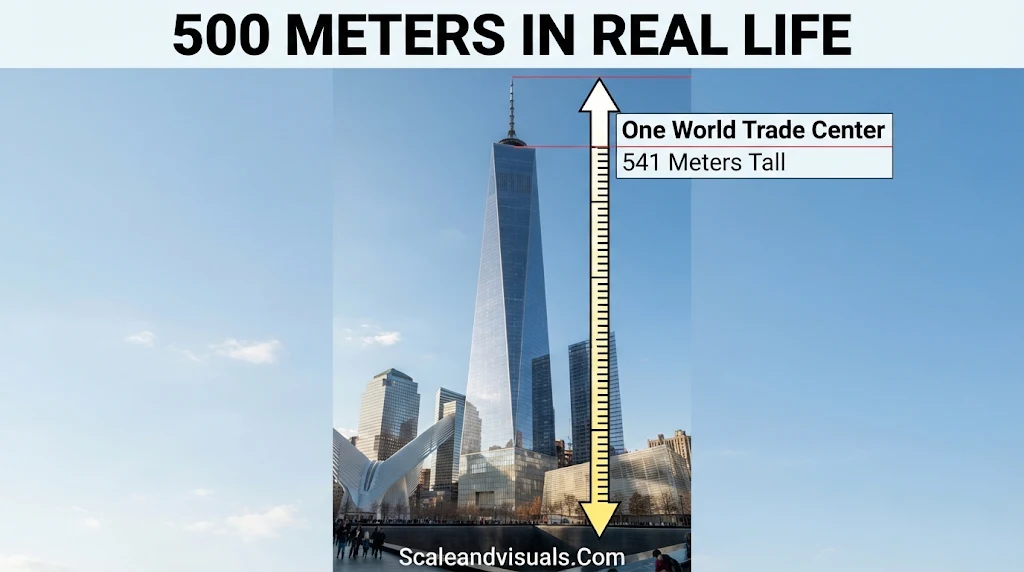
- Taipei 101. The building is about 508 meters tall. It is just over the mark.

- Willis Tower in Chicago. The roof is 442 meters high. With its antennas, it reaches 527 meters. Both figures are listed by the CTBUH.
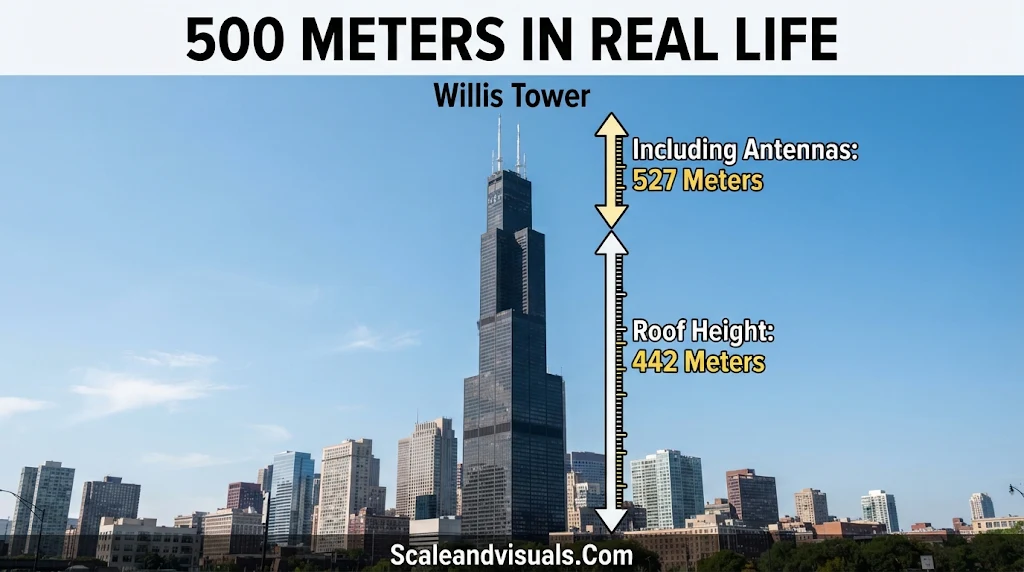
- Golden Gate Bridge towers. Each tower rises about 227 meters above the water. Stack a little over two and you reach 500 meters.
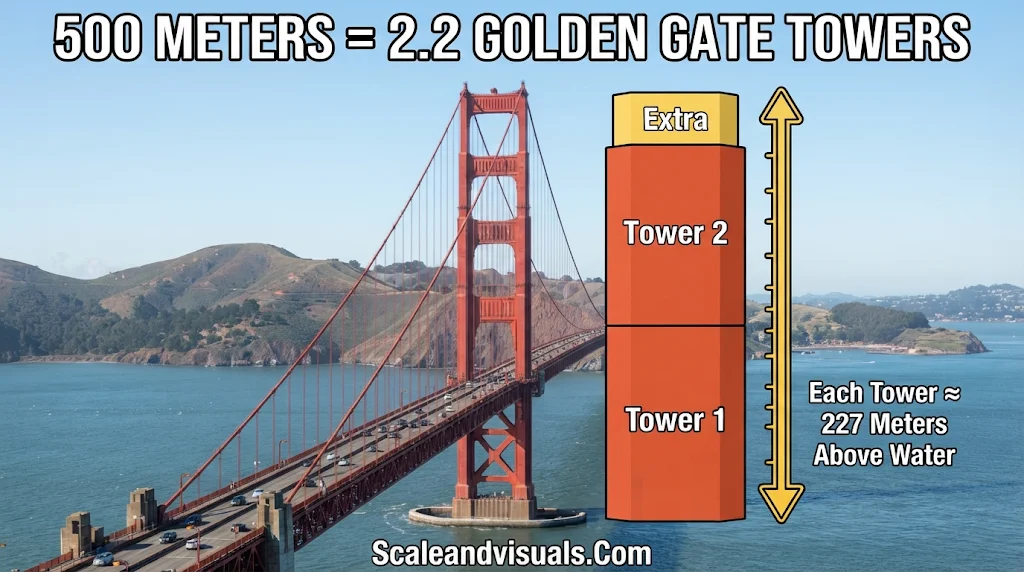
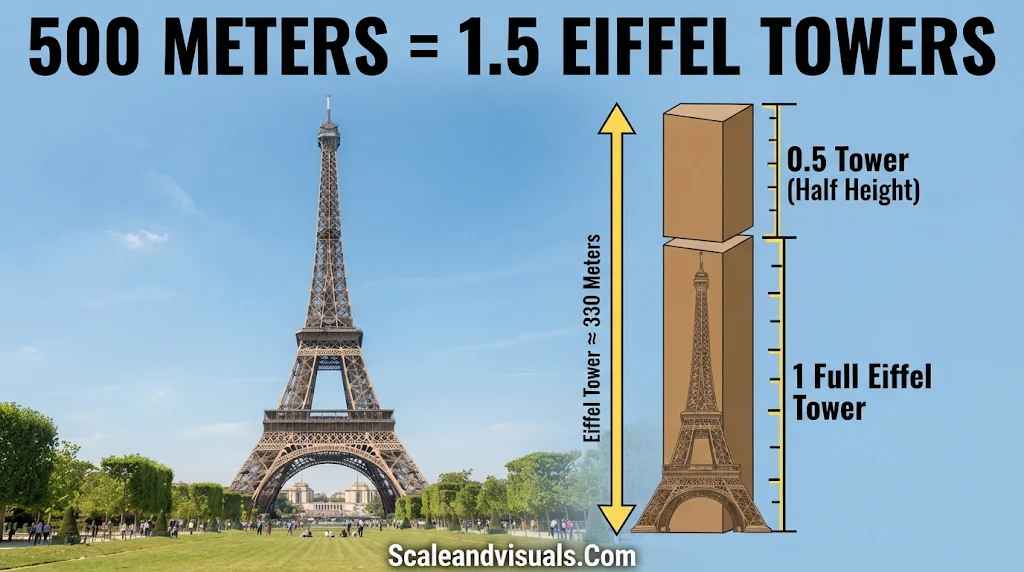
- The Eiffel Tower. It is about 330 meters tall. So 500 meters is roughly 1.5 Eiffel Towers.
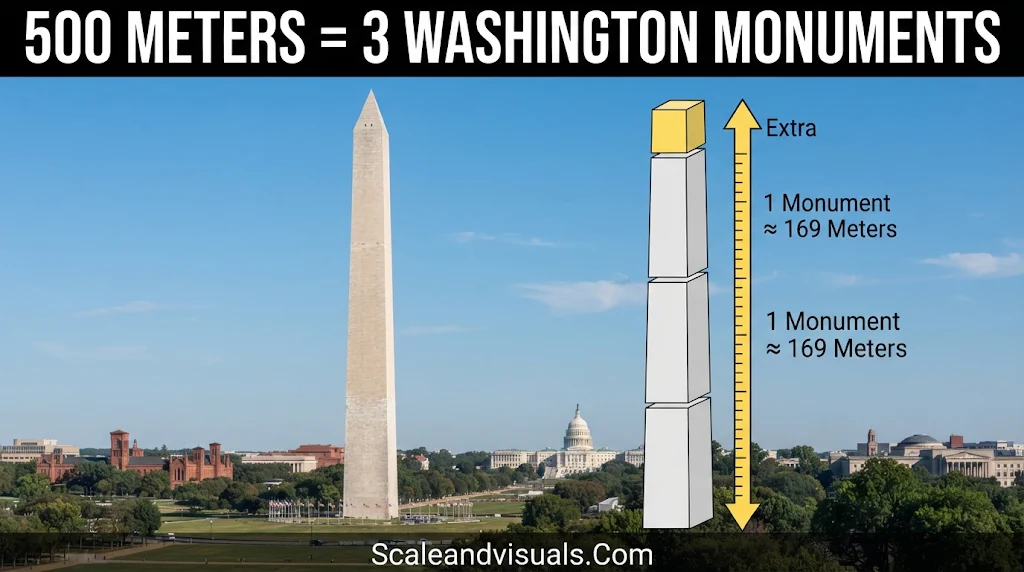
- The Washington Monument. It is about 169 meters tall. Three stacked reach 507 meters.
- The Statue of Liberty. From ground to torch, it is about 93 meters. About five and a half stacked equal 500 meters.

- About 125 floors of a modern skyscraper. At roughly 4 meters per floor, 125 floors make 500 meters.
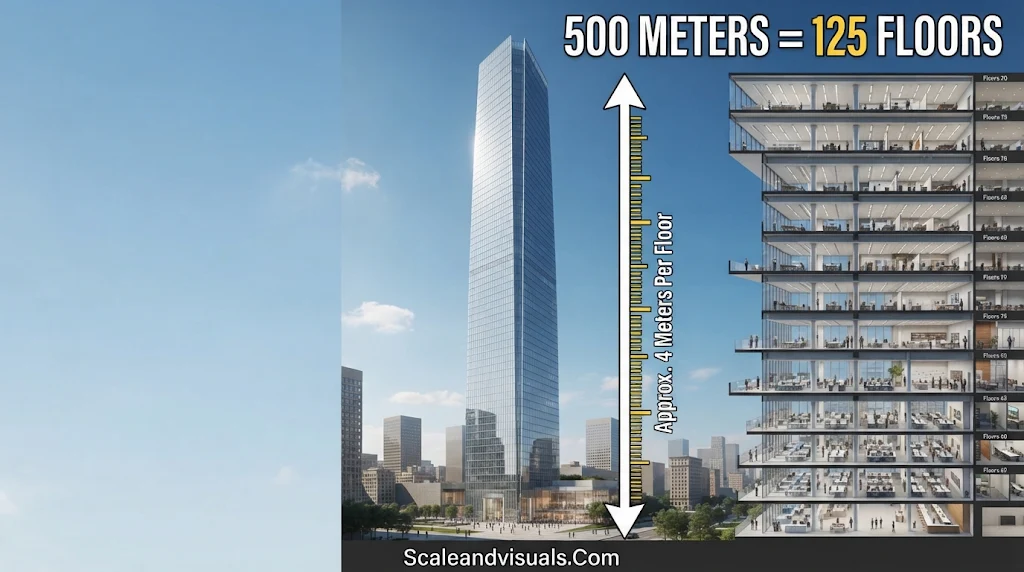
Tall buildings show 500 meters as height. Pools and fields show it as horizontal distance. Both give you the same length to picture.
How Long Does It Take to Walk or Run 500 Meters?
Most adults walk 500 meters in about 5 to 7 minutes. Your pace, age, and route change the time.
| Pace | Speed | Time for 500 Meters |
|---|---|---|
| Slow walk | 2 mph | About 9 minutes |
| Average walk | 3 mph | About 6 minutes |
| Brisk walk | 3.5 to 4 mph | About 4½ to 5½ minutes |
| Easy jog | 5 to 6 mph | About 3 to 4 minutes |
| Fast run | 9+ mph | About 2 minutes or less |
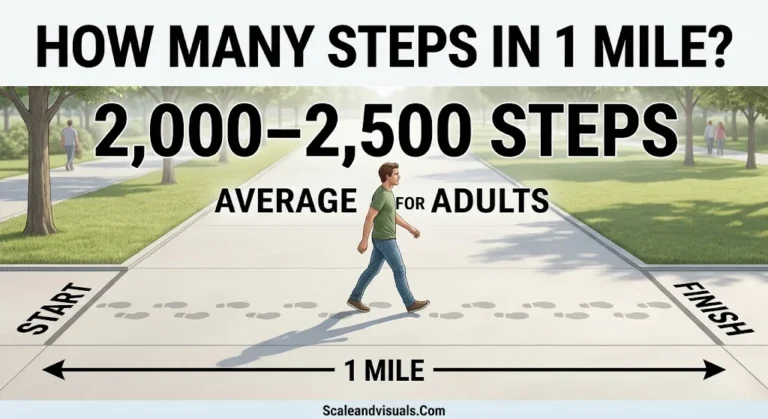
Most adults take about 650 to 700 steps to cover 500 meters. A longer stride means fewer steps. A round trip of 500 meters each way takes about 12 minutes of walking. That helps you reach the weekly goal of 150 minutes of moderate activity set by the CDC. Many transit planners treat a quarter mile to a half mile as a comfortable walk to a stop. At 0.31 miles, 500 meters fits well inside that range. Hills, heavy bags, heat, strollers, and wheelchairs can slow you down. Plan a few extra minutes in those cases.
FAQs
How far is 500 meters to walk in miles?
It is about 0.31 miles. That is a little under one-third of a mile.
How long does 500 meters take to walk?
It takes about 5 to 7 minutes at a normal pace. A brisk walker can finish in about 5 minutes.
Is 500 meters a long distance?
No. It is half a kilometer and an easy walk for most people. It feels longer uphill, in bad weather, or with a heavy load.
How many football fields is 500 m?
It is about 5.5 American football fields between the goal lines (91.44 meters each). With both end zones (109.7 meters), it is about 4.6 fields. It is also close to five soccer pitches.
How far is 4 football fields?
Four fields between the goal lines equal 400 yards. That is about 366 meters or 1,200 feet. With both end zones, four fields equal 480 yards, or about 439 meters. That is roughly 0.27 miles.
Conclusion
500 meters is half a kilometer. It equals about 1,640 feet, 0.31 miles, and 5½ American football fields. Most people walk it in 5 to 7 minutes. Picture ten Olympic pools or five soccer pitches, and the distance is easy to remember.

Abroy Usman is a passionate digital content creator and visual enthusiast dedicated to making complex ideas easier to understand through clear, engaging, and visually appealing content. As an author at Scale & Visuals, he focuses on sharing practical insights, creative ideas, and useful information designed to help readers learn, grow, and make better digital decisions.