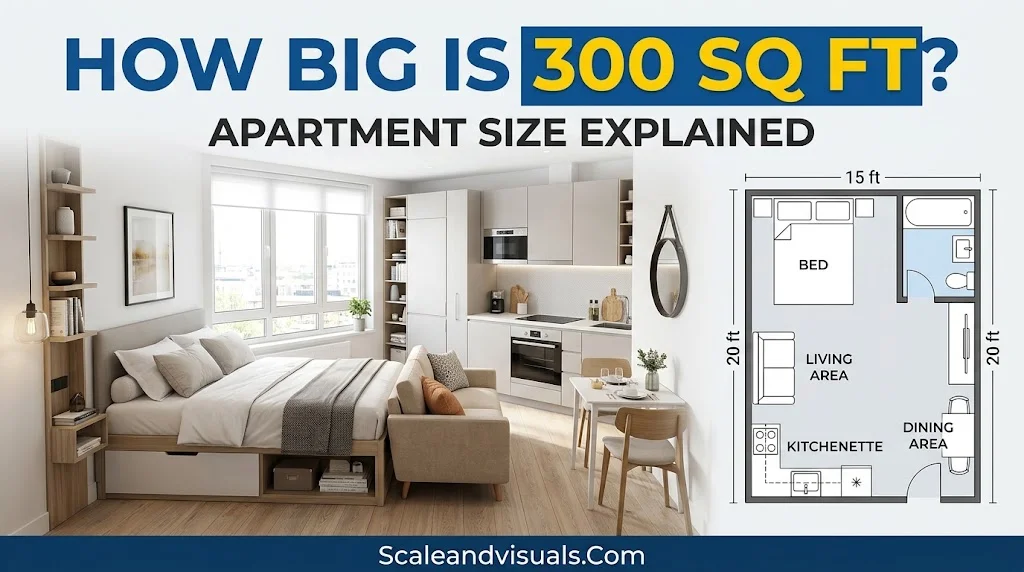
A 300 sq ft apartment is about the size of a roomy one-car garage or a large primary bedroom. In metric, 300 square feet is about 27.9 square meters.
Listing photos make small spaces hard to judge. Below you’ll find real dimensions, 17 layouts and clear answers on what fits and what doesn’t.
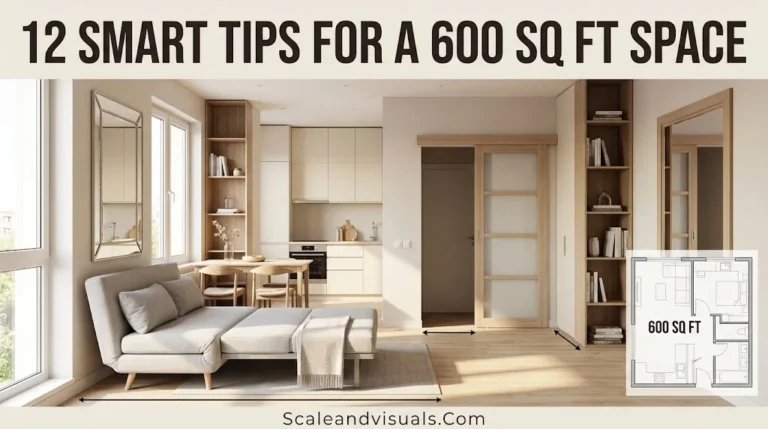
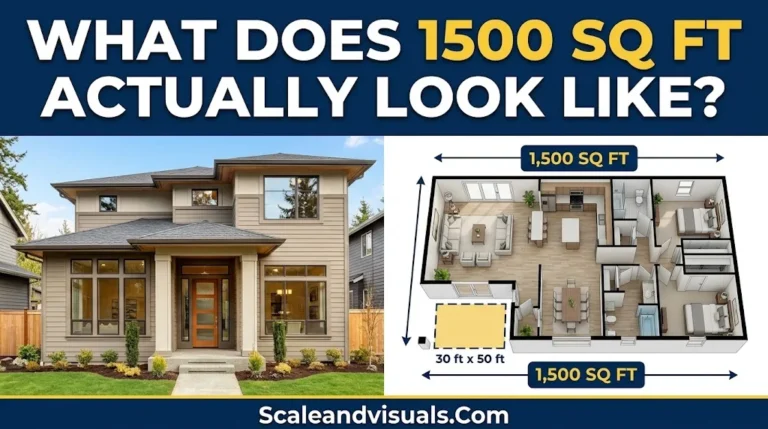
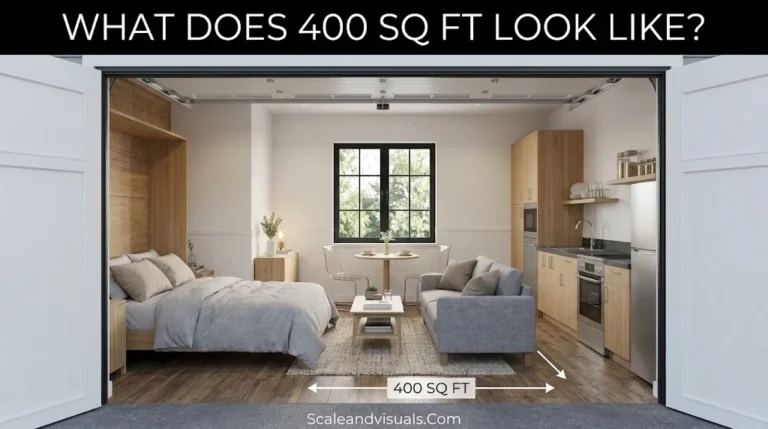
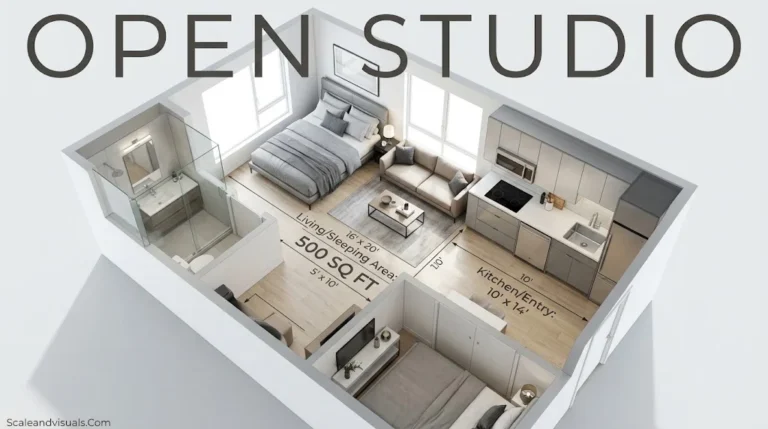
Understanding a 300 square feet apartment is easier when you compare it with familiar spaces and everyday measurements. Exploring different space and size comparisons can help you visualize how small apartments function and make smarter decisions about furniture, layouts, and storage.
Table of Contents
How Big Is 300 Square Feet? Size, Dimensions and Comparisons
To find how big 300 square feet is, multiply length by width. The shape matters as much as the number.
Common 300 square feet room dimensions:
- 15 × 20 feet: balanced and easy to furnish.
- 12 × 25 feet: a little longer and narrower.
- 10 × 30 feet: tighter, with a hallway feel.
- 17.3 × 17.3 feet: a perfect square, but rare.
What does 300 square feet look like in real life?
- A one-car garage (a 15 × 20 garage is exactly 300 sq ft).
- Two standard parking spaces, at about 9 × 18 feet each.
- A mid-size hotel room.
- A large primary bedroom.
Is 300 square feet small compared to a typical home? Yes. The median new U.S. single-family home was about 2,163 square feet in Q3 2025, per Census Bureau data on FRED. A 300 square feet studio is about 14% of that.
300 square feet in other units:
- 27.9 square meters
- 33.3 square yards
- 0.007 acres
A 300 square feet apartment can feel surprisingly functional with the right layout and smart storage solutions. To understand how much smaller spaces compare, explore real-life examples of 200 square feet and see how fewer square feet can change the way a room feels and functions.
300 Square Feet Apartment Layouts: What It Really Looks Like
Seeing real layouts makes the size click. Here are 17 ways people use 300 square feet.
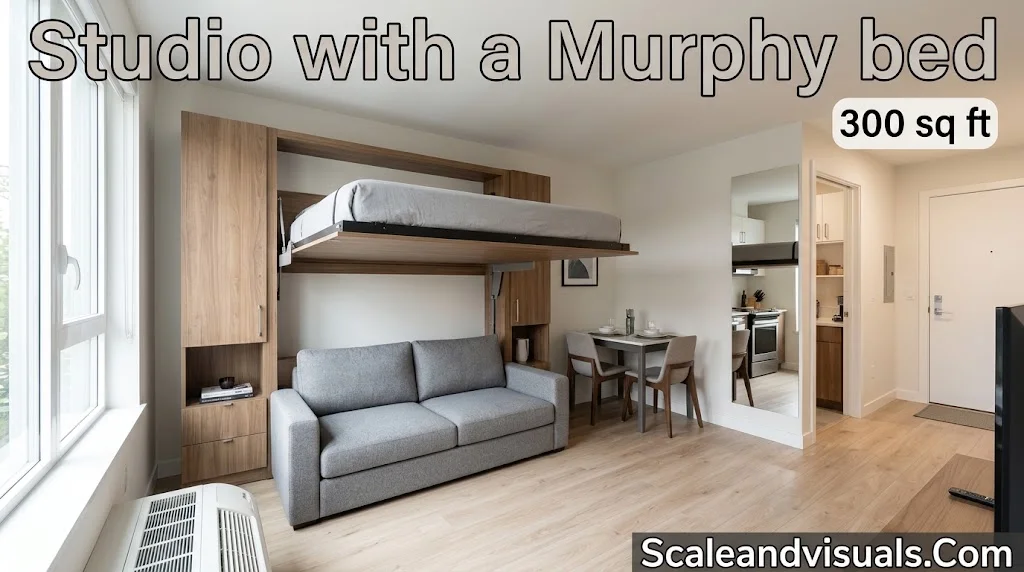
- Studio with a Murphy bed: The bed folds into the wall by day. You get a living room back.
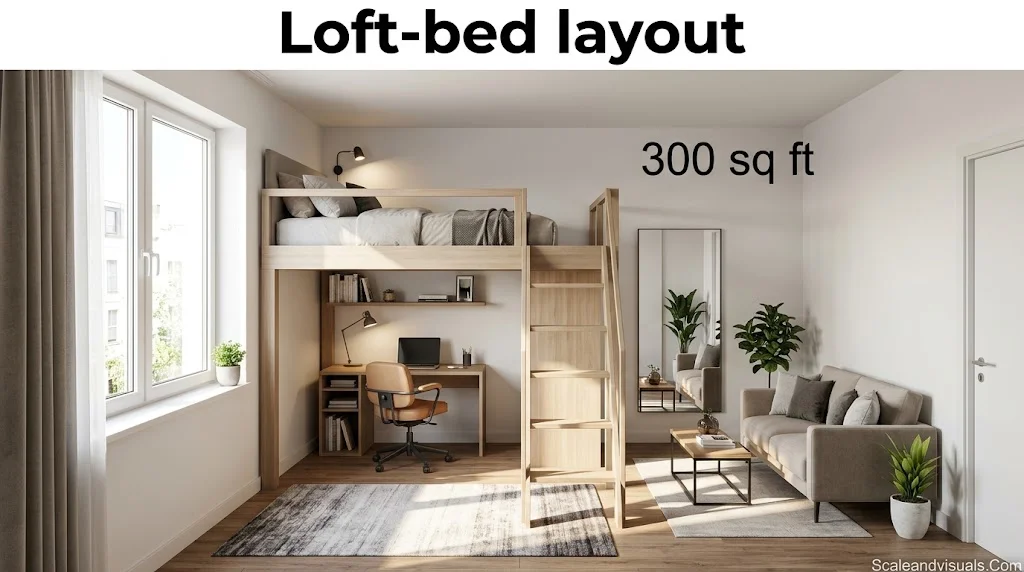
- Loft-bed layout: The bed sits up high. A desk or sofa fits underneath.
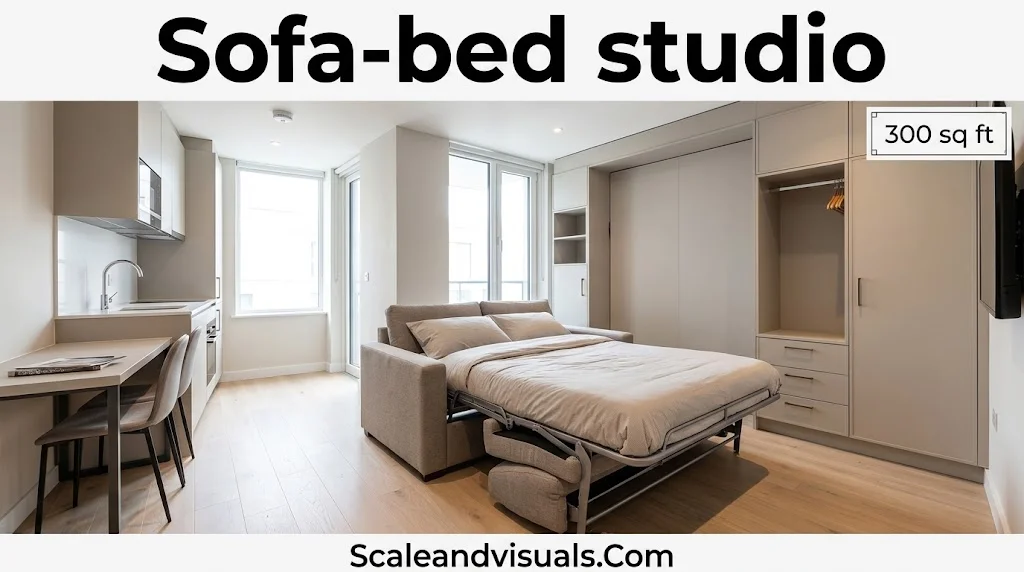
- Sofa-bed studio: One piece of furniture works as seating and as a bed.
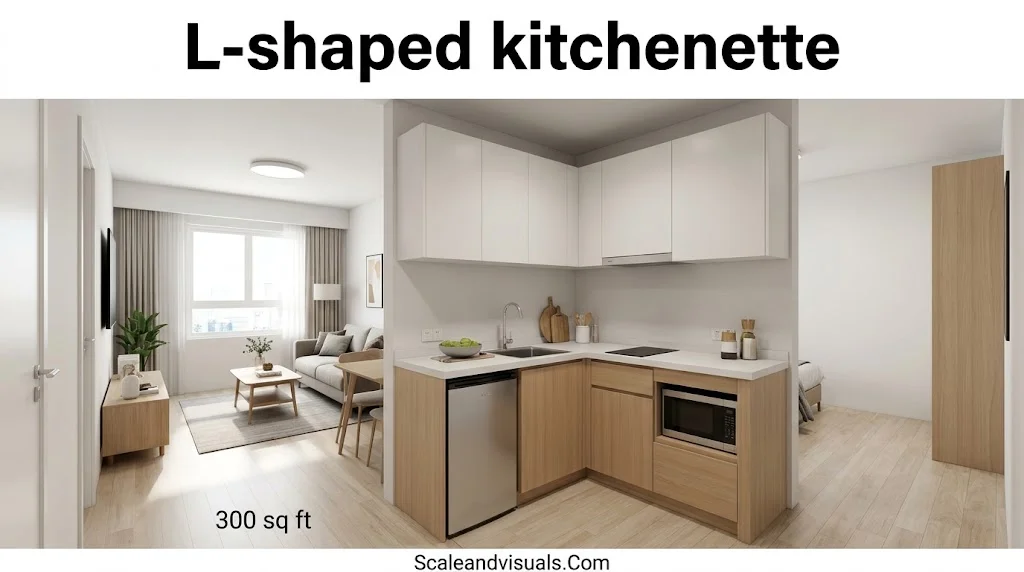
- L-shaped kitchenette: Cooking wraps around one corner and stays out of the living area.
- Pullman kitchen: The fridge, stove and sink line up on a single wall.

- Micro-apartment with a closet wall: A built-in wall of storage keeps floors clear.

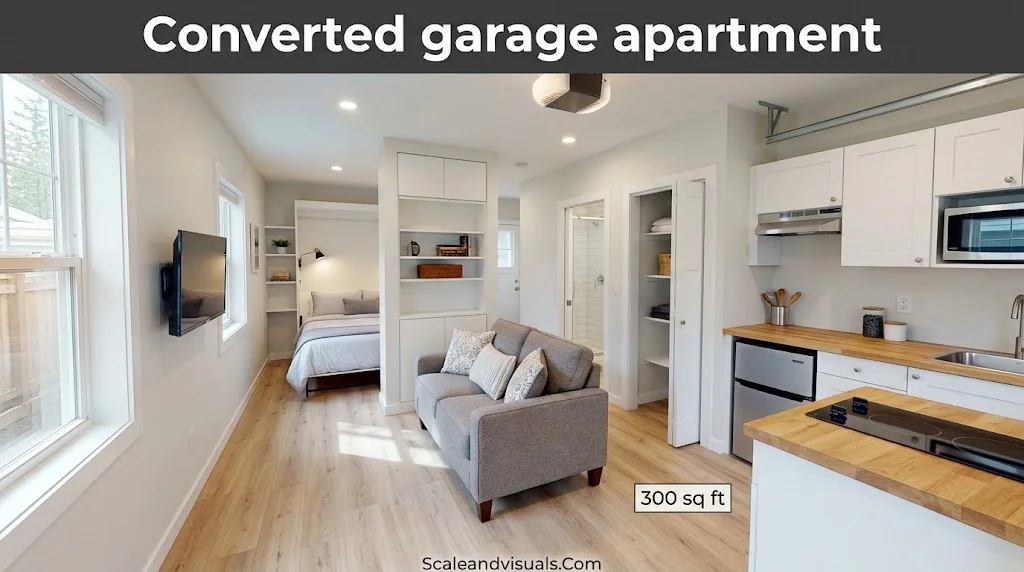
- Converted garage apartment: The garage footprint already matches 300 sq ft.
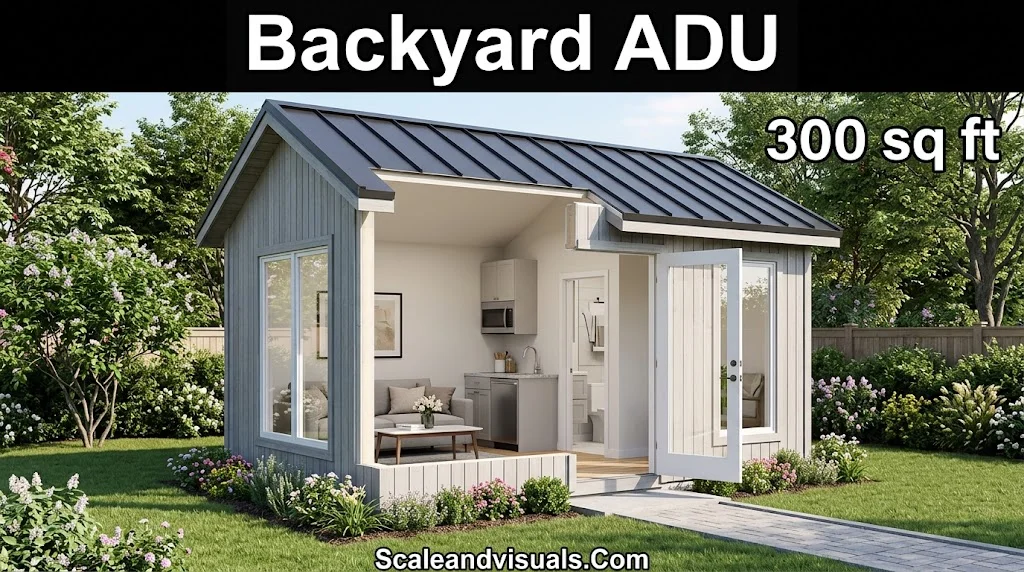
- Backyard ADU: A small accessory dwelling unit with its own entry and bath.
- Shipping container home: Two joined 20-foot units can land near 300 sq ft.

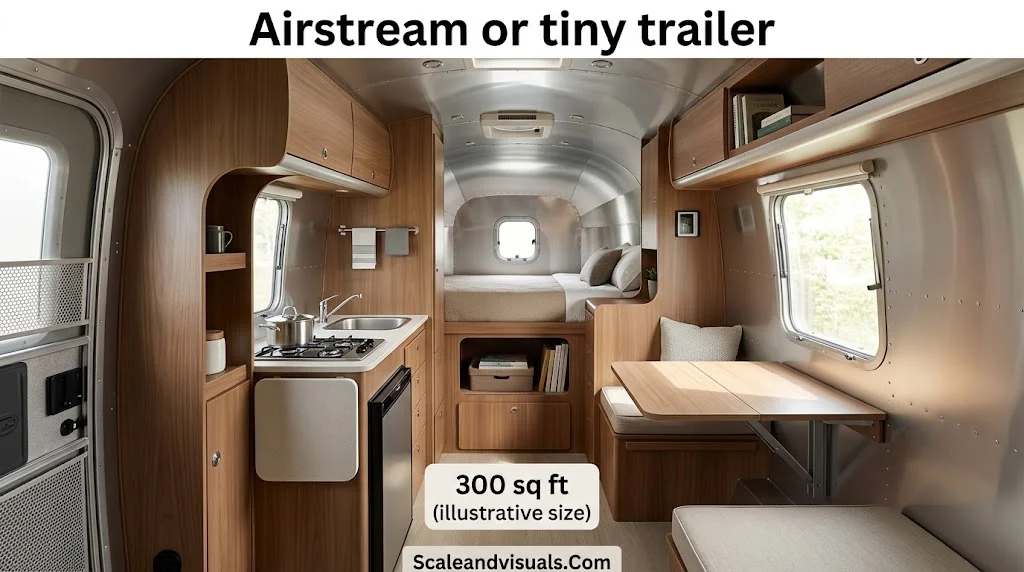
- Airstream or tiny trailer: Built-in cabinets and fold-away tables do the work.
- Basement studio: Tall shelves make up for lower ceilings.

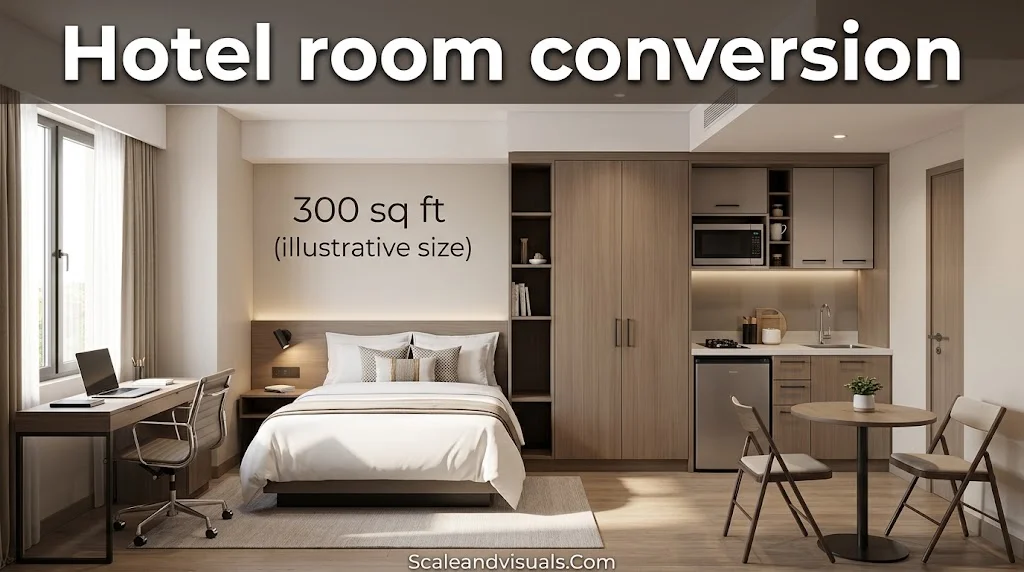
- Hotel room conversion: Many older rooms are already close to 300 sq ft.
- Dorm-style studio: A bed, desk and compact closet in one tidy room.

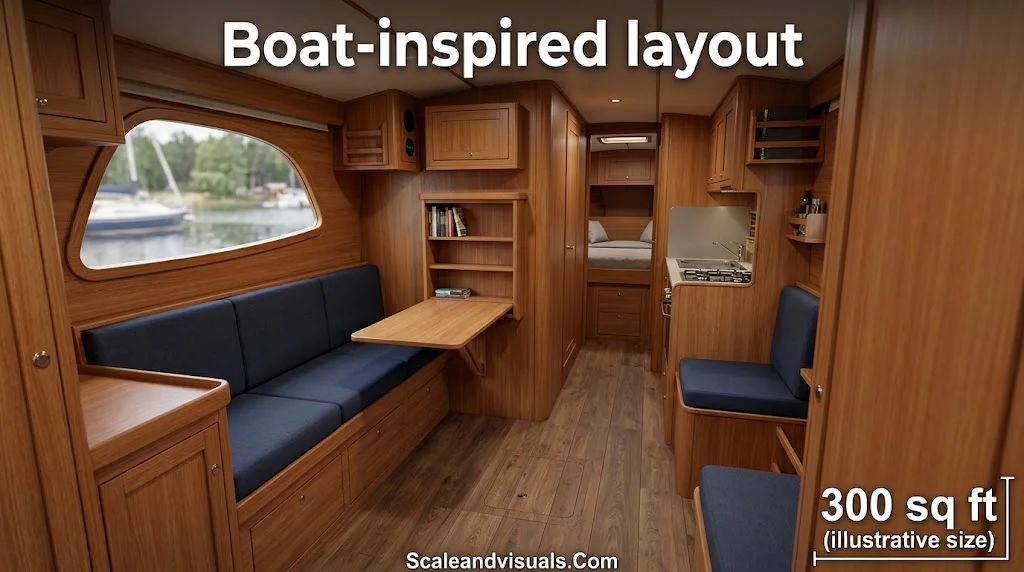
- Boat-inspired layout: Benches with storage and tables that fold down.
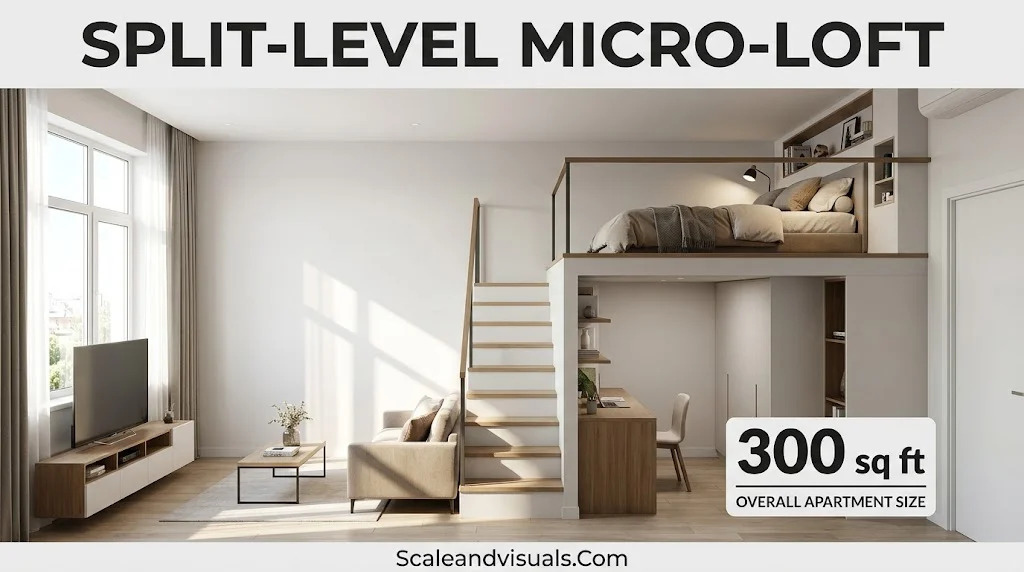
- Split-level micro-loft: A raised sleeping platform stacks two zones.
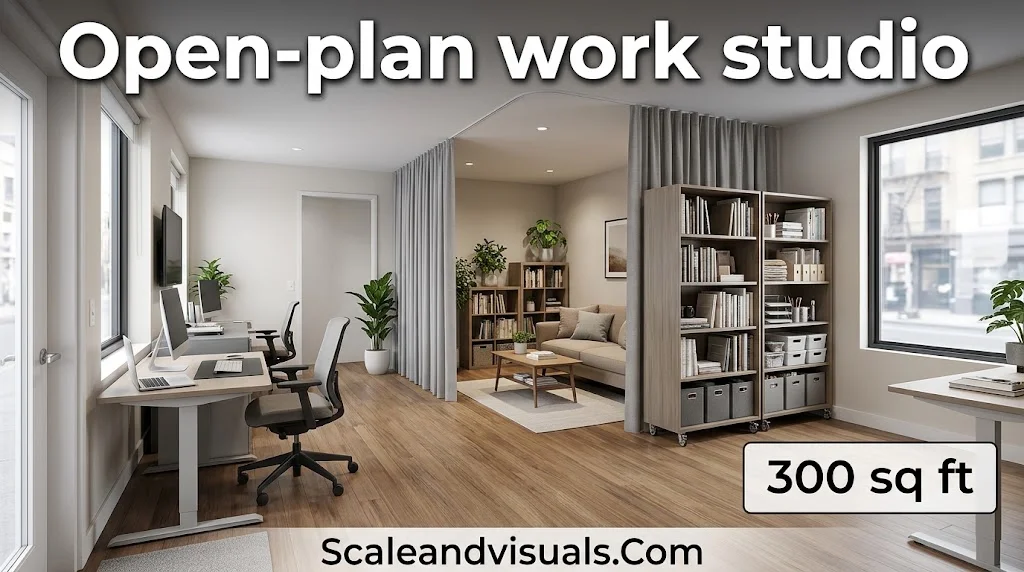
- Open-plan work studio: Curtains or rolling shelves split work from rest.
- Studio for two: A bookshelf or rug divides sleeping from living.
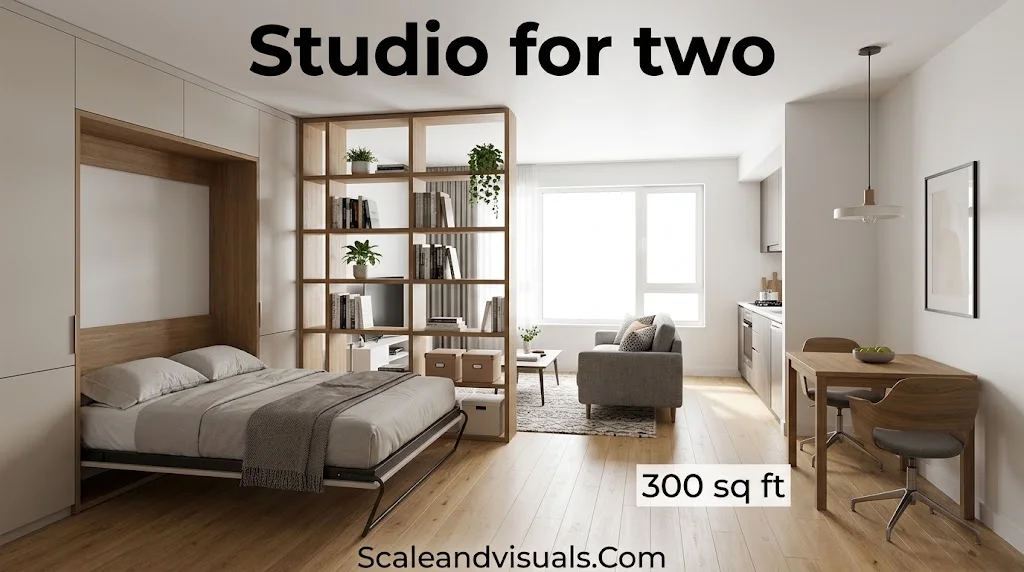
What furniture fits in 300 square feet? A queen bed takes about 33 square feet, which is roughly 11% of the floor. A loveseat, a small table and a slim storage unit still fit. A sectional, a king bed or a full dining set will crowd the room.
Is 300 Sq Ft Livable? Smart Ways to Maximize It
Yes, it can be livable for the right person. It works best for solo renters, students and minimalists.
Pros:
- Lower rent in most markets
- Smaller utility bills
- Fast cleaning
Cons:
- Limited storage
- Little privacy for two people
- Hard to host guests
Is 300 square feet enough for two people? It can work, but most couples feel more comfortable in 400 to 600 sq ft.
How to make 300 square feet feel bigger:
- Choose multipurpose furniture, such as a storage ottoman or a fold-down desk.
- Use vertical storage, such as tall shelves and wall hooks.
- Place a mirror across from a window to bounce light around.
- Pick light wall colors and keep furniture legs visible.
- Zone with rugs, shelves and lighting.
- Keep only what you use.
Can you work from home in 300 square feet? Yes. A fold-down desk or a loft-bed setup with a desk below gives you a work zone.
Common mistakes to avoid:
- Buying oversized furniture
- Blocking windows
- Using dark colors everywhere
- Skipping closet checks
Before you sign a lease, check:
- Ceiling height
- Natural light
- Closet depth
- Outlet count
- Where the fridge and bed will go
FAQs
Is a 300 square feet apartment small?
Yes. It is compact, though normal for a studio. It sits above a micro-apartment (150 to 250 sq ft) and below most one-bedrooms (500 to 750 sq ft). Smart layouts and multipurpose furniture make it comfortable for one person.
How big does 300 square feet look like?
Picture a 15 × 20 foot room. That is about a one-car garage, two parking spaces or a large primary bedroom. It holds a bed, a small sofa, a kitchenette and a bathroom with careful planning.
Is 300 square feet a big living room?
Yes, it is very big for a living room. Living rooms in apartments often run around 200 to 250 square feet, per Design Files. A 300 sq ft living room fits a sofa, chairs, a media wall and a dining table.
Is 300 square feet a big bedroom?
Yes. Primary bedrooms average 200 to 400 square feet, according to Angi, so 300 sq ft sits in the middle of that range. An average bedroom is only about 132 square feet.
Conclusion
300 square feet is smaller than a typical home but bigger than it sounds. Layout, zoning and smart furniture matter more than the raw number. It suits solo renters, students and anyone who wants a simple, low-cost home.

Abroy Usman is a passionate digital content creator and visual enthusiast dedicated to making complex ideas easier to understand through clear, engaging, and visually appealing content. As an author at Scale & Visuals, he focuses on sharing practical insights, creative ideas, and useful information designed to help readers learn, grow, and make better digital decisions.